Microlearning Platform for Corporate Training in 2026: Best Tools and When to Build Custom

Your employees are forgetting up to 90% of training content within a month. That is not a trainer problem. It is an architecture problem. Ebbinghaus's forgetting curve research, first documented in 1885 and replicated consistently across modern workplace learning studies, confirms that without reinforcement, people forget roughly half of new information within a day and the large majority within a month.
The fix is not shorter PowerPoints delivered over Zoom. It is a purpose-built microlearning platform for corporate training that delivers the right content, in the right format, at the point of need.
This post covers what actually separates the top microlearning platforms for corporate training in 2026, runs the real comparison between EdApp (now SC Training) and a custom build, and gives you the decision framework TRT uses when clients ask us whether to buy or build.
- EdApp/SC Training is the fastest SaaS deployment for teams under 500, but AI features and white-label branding require paid enterprise tiers that push annual costs above $25K
- Custom microlearning platforms cost $40K to $280K depending on scope, with break-even versus SaaS at roughly 1,000 monthly active learners on a 3-year view
- TikTok-style vertical video delivery drives 3.4x higher module completion than slide-based content, per LinkedIn Learning's 2025 Workplace Learning Report
- The AI features worth demanding are adaptive spaced repetition, auto-content generation from PDFs, and learner risk flagging, not badge gamification
- The build-vs-buy decision comes down to one variable: how much your training product depends on white-label control and integration depth that SaaS platforms will not give you
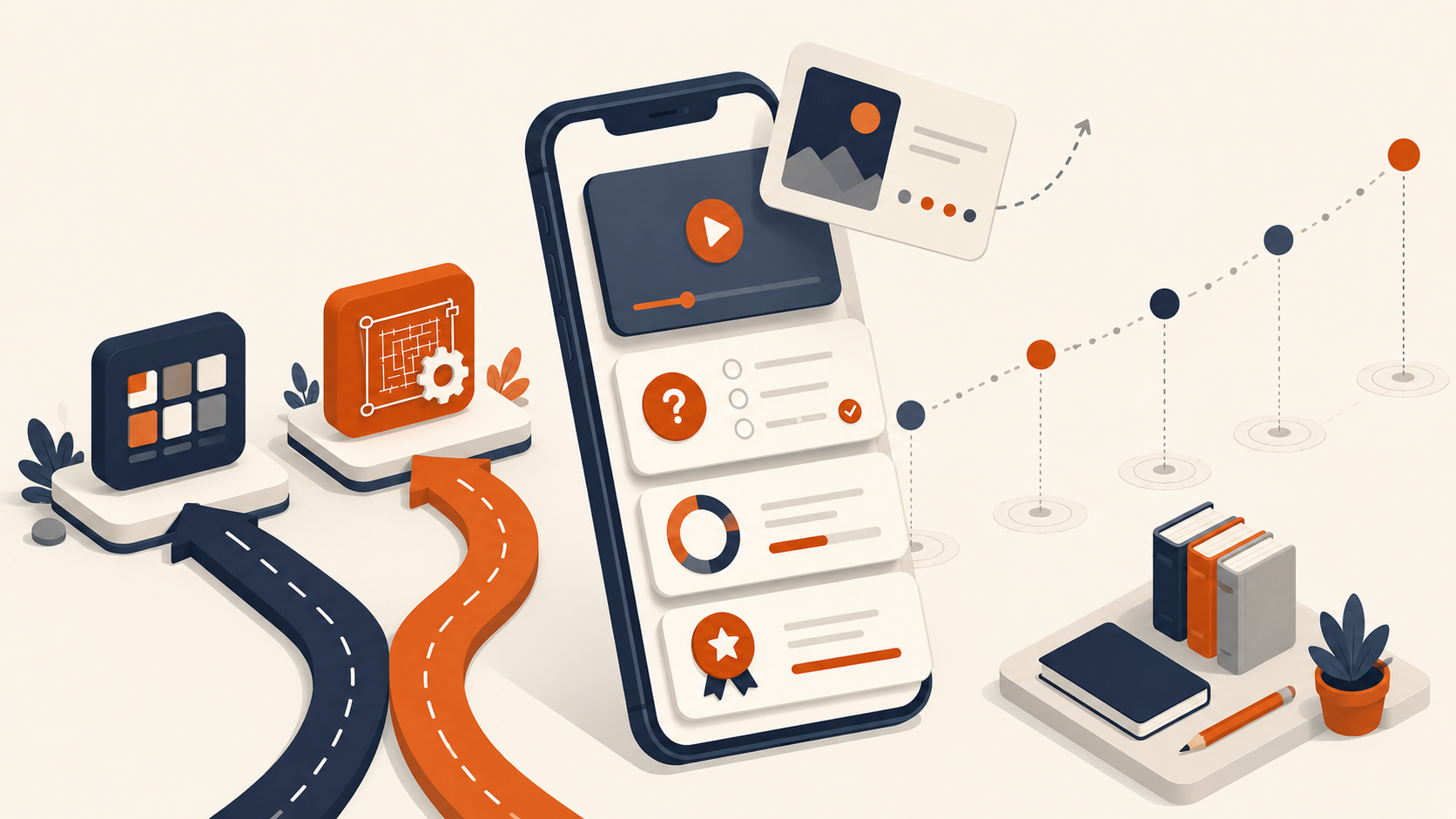
Quick answer: Microlearning delivers training in short, focused lessons—videos, quizzes, and quick modules—that fit into a busy workday and improve retention. Companies use custom microlearning platforms to onboard staff, upskill teams, and reinforce compliance training at scale.
Why 90% of Corporate Training Content Is Forgotten in a Month
The Ebbinghaus Forgetting Curve, documented in 1885 and validated repeatedly since, shows that without reinforcement, people forget half of new information within an hour and up to 90% within seven days.
Brandon Hall Group's 2024 L&D Benchmarking Study found that organizations using microlearning platform delivery see knowledge retention improve by 80% compared to equivalent hour-long modules, and content delivery speeds up by 17%. That gap has a cost.
IBM estimated the cost of employee skill gaps at $3,500 per employee per year in lost productivity. For a 500-person company with any technical or compliance training requirement, that is $1.75 million annually sitting in the gap between "we trained them" and "they can actually do it."
The microlearning model addresses this at the architecture level: content in 3 to 10 minute modules, delivered on a spaced repetition schedule, with assessments built into the format rather than bolted on at the end. The best microlearning platforms for corporate training in 2026 operationalize all three of these principles. The ones that fail do two of them.
The Best Microlearning Platforms for Corporate Training in 2026
Four microlearning platforms dominate the corporate training market in 2026. Each one wins on a different dimension. Understanding where each platform focuses tells you which one fits your L&D program's actual constraints.
SC Training (formerly EdApp) by SafetyCulture
SafetyCulture acquired EdApp in 2020 and rebranded it to SC Training in 2024. Here is the 2026 development every L&D team needs to know: SafetyCulture is retiring the standalone SC Training app on March 31, 2026, and folding it into its broader operations platform, a migration affecting more than a million users.
It is still the platform most teams search for and benchmark against, largely because its free tier supported real deployments and its 80-plus prebuilt templates cut content-creation friction. But that retirement is exactly why the build-versus-buy question below now matters more than it did a year ago.
The platform's AI features, added in 2024 and 2025, include AI Translate (auto-translation of existing courses into 100+ languages), AI Create (question generation from uploaded PDFs or text), and AI Coach (a conversational practice tool for sales and service scenarios). These are genuine features, not feature-named product marketing.
They work. The catch: the AI features and white-label branding sit behind the Pro and Enterprise tiers. Teams expecting the free plan to power a branded internal training experience will hit the ceiling fast.
Pricing is not published; enterprise contracts typically start at $5 to $8 per user per month for 500+ seats based on published case studies and reseller disclosures.
Axonify
Axonify targets frontline workers in retail, manufacturing, and healthcare. Its model is built around a daily 3-question adaptive reinforcement format rather than full module delivery.
The AI engine adjusts question frequency based on individual performance, applying spaced repetition automatically without L&D admin input. Retention outcomes are documented: Axonify reports 83% knowledge retention after six months of daily use across its client base, compared to a reported 10 to 20% baseline from pre-deployment assessments.
Pricing is enterprise-only and undisclosed; contracts typically start above $20,000 per year. It is not the platform for teams that also need to build and deliver original course content.
iSpring Learn
iSpring Learn is a SCORM-first LMS with a bundled authoring tool, targeting companies that need compliance training, certification tracking, and LMS reporting depth alongside microlearning delivery.
At $2.29 to $3.66 per user per month (billed annually, 100+ users), it is the most cost-transparent option in this group. It is not a native microlearning platform for corporate training in the way Axonify is. It is a traditional LMS that supports short-form content.
If your L&D program is primarily compliance and certification rather than behavioral change and skill transfer, iSpring Learn is the most administratively complete option.
Spekit
Spekit is purpose-built for sales enablement and in-app learning. It delivers micro-sized content cards directly inside CRM interfaces, notably Salesforce, at the moment a rep needs them.
It is not a training platform in the traditional sense. It is a performance support tool that surfaces training context inside the workflow. Pricing is not publicly listed; enterprise quotes typically fall in the $20 to $30 per user per month range based on available market data. For companies with large Salesforce-dependent sales teams,
Spekit reduces the gap between "trained on the product" and "using product knowledge in a live call." For general corporate training programs, it is the wrong tool. If none of these four platforms cover your specific integration or white-label requirements, that is usually the signal that a custom build is worth evaluating.
Third Rock Techkno has built custom microlearning platforms for corporate training companies, EdTech startups, and enterprise L&D teams. Talk to us →
Custom Microlearning Platform vs EdApp: The 2026 Feature Comparison
SC Training (EdApp) is the SaaS reference point most L&D teams still benchmark against, which is why we compare against it here even as it is being retired as a standalone product in March 2026.
The comparison below is based on its Enterprise tier, not the free plan, because that is what a 500-person deployment actually costs. Running this against a custom build at equivalent scale changes the ROI conversation significantly, and the vendor's exit makes owning your platform look less like a luxury and more like insurance.
The cost comparison above is deliberately close at 500 users. At 1,000+ monthly active learners, custom microlearning platforms win on 3-year TCO (total cost of ownership).
Below 500 users, SaaS wins on time-to-value. The inflection point is not just user count. It is what you lose by staying on SaaS at scale: white-label control, custom AI logic, and analytics depth that SaaS vendors will never build because it only benefits your training product, not their platform roadmap.
AI Microlearning Platform Features That Actually Change Completion Rates
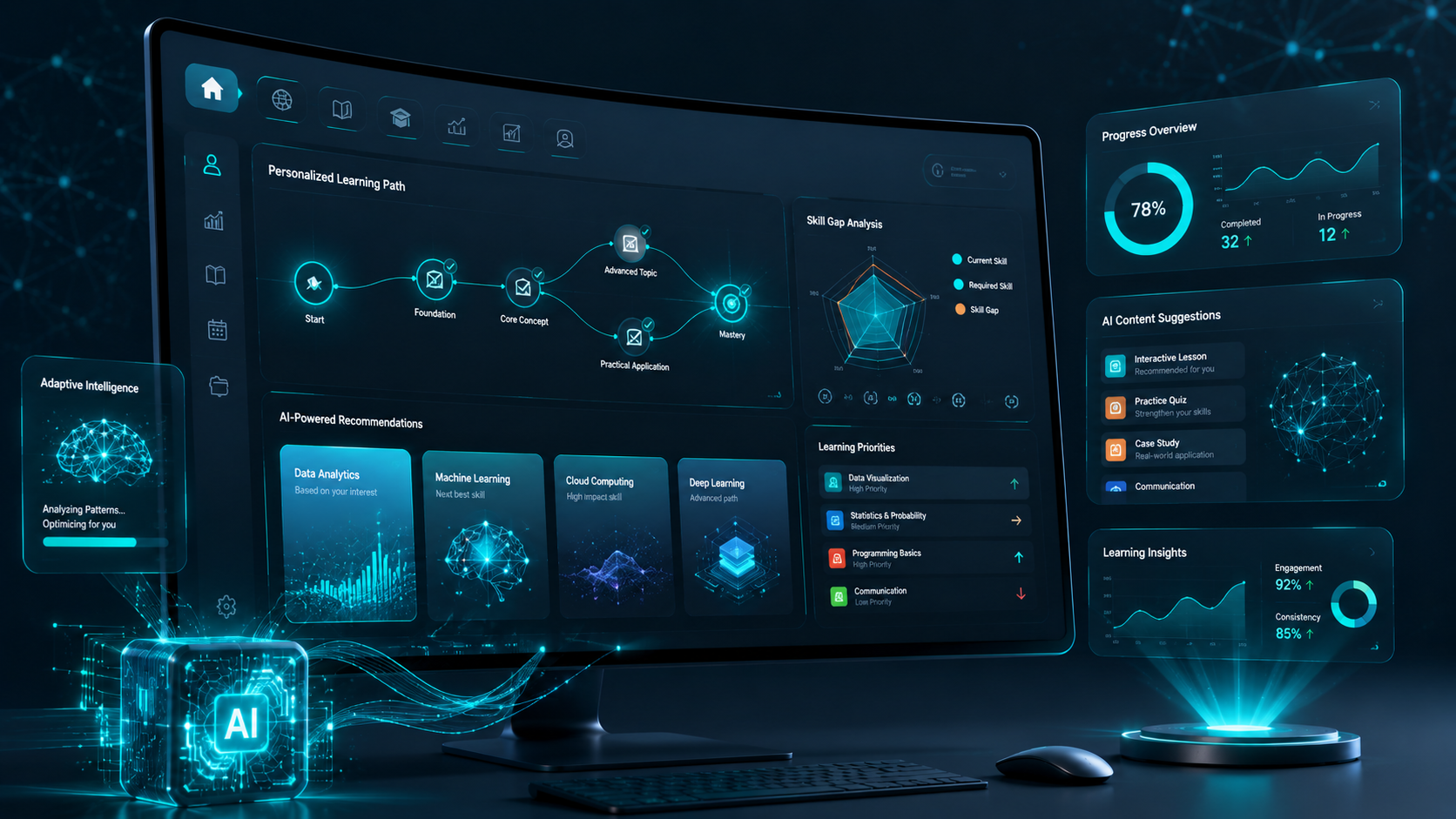
Not all AI features on microlearning platforms for corporate training deliver equal value. The ones that move completion rates and knowledge retention are specific. L&D buyers should use this as an evaluation checklist, not a marketing filter.
The features L&D managers should avoid prioritizing: gamification badges, leaderboards, and notification systems. These are engagement mechanics, not learning architecture. A microlearning platform for corporate training with strong adaptive spaced repetition and weak gamification will outperform the inverse every time.
TRT's EdTech engineering team has evaluated SaaS microlearning tools and built custom alternatives for training companies across the US and GCC markets. Get a free technical review →
TikTok-Style Microlearning for Corporate Training: What the Format Actually Requires
LinkedIn Learning's 2025 Workplace Learning Report found that short-video learning content drives 3.4 times higher completion rates than slide-based modules of equivalent length. The reason is not that employees have shorter attention spans. It is that the mobile-vertical-swipe format, made native by TikTok, aligns with how people already consume information on their phones after work hours.
"The format that gets consumed voluntarily in personal time will get consumed in training time. The mistake is building training content that looks like a PowerPoint deck and expecting it to compete with a phone screen."- TRT EdTech Engineering Team, internal assessment, 2025
Implementing TikTok-style microlearning for corporate training is not a content decision. It is a platform architecture decision. The requirements that differ from a standard microlearning platform:
Vertical video player (9:16 aspect ratio): Most enterprise LMS players are built for 16:9 market video. A vertical player requires a different rendering pipeline and different content authoring tooling. SaaS platforms are beginning to support this, but the content creation tools still default to market templates.
Swipe navigation: The UX pattern where learners swipe up through modules (rather than clicking a "Next" button) requires native mobile app delivery, not a mobile-responsive web app. This distinction matters for offline access and push notification capabilities.
Content looping and save-for-later: TikTok's replay mechanic and saved content queue translate to better completion rates in training contexts. Building these features into a custom microlearning platform for corporate training is straightforward. Finding them in SaaS platforms requires checking individual feature roadmaps.
Creator tools: If your L&D team or subject-matter experts need to record short-form vertical video directly in the platform, you need an authoring tool designed for the format. Most legacy authoring tools were not built for this.
Understanding what TikTok-style delivery requires technically informs the build cost. The vertical video pipeline, native swipe navigation, and creator authoring tools all show up as specific line items in the development estimate below.

Custom Microlearning App Development Cost, Timeline, and What L&D Buyers Miss
The cost of a custom microlearning platform for corporate training depends on three variables: the feature set, the AI sophistication, and the integration requirements. Below are realistic ranges from TRT's project history, not vendor quotes.
MVP Custom Microlearning Platform ($40K to $80K, 3 to 4 months)
An MVP includes: mobile app (iOS and Android) with a vertical video player, a web-based content authoring tool for L&D admins, course assignment and progress tracking, basic analytics dashboard, and one HRIS integration. At this scope, you have a functional training product. You do not have adaptive AI or custom reporting. This level is appropriate for training companies building their first proprietary platform and wanting to validate the format before a full build.
Full Custom Microlearning Platform ($120K to $280K, 7 to 14 months)
A full build adds: adaptive spaced repetition engine trained on your competency framework, conversational AI coach, TikTok-style swipe delivery with offline sync, custom analytics with skill gap reporting, three or more deep integrations (HRIS, CRM, compliance reporting), and a white-label mobile app under your brand on both app stores.
The timeline variable at this scope is data readiness. Organizations with a documented competency framework and clean historical learner data ship faster. Those discovering data gaps during the build add two to four weeks per gap.
Ongoing Costs (Post-Launch)
Infrastructure for a custom microlearning platform for corporate training typically runs $8,000 to $20,000 per year at 500 to 2,000 monthly active users, depending on video storage and AI inference volume. Maintenance and feature development runs $15,000 to $40,000 per year if you retain an external engineering partner.
What TRT Has Found Building Custom Microlearning Platforms for Training Companies
TRT's EdTech engineering team has built custom LMS and microlearning products for corporate training companies in the US and GCC markets. Three patterns appear consistently across those projects.
We build these platforms in-house, not just for clients. Our own products, including SourceBook and Learnly AI, run on the same adaptive-learning and content foundations, and our custom LMS development experience applies directly to corporate microlearning.
The white-label requirement always arrives late. Clients who start with EdApp or a similar SaaS microlearning platform for corporate training commonly return 18 months into the contract having hit the branding ceiling. The SaaS platform's logo appears on mobile push notifications, app store listings, or user-facing system emails. For a training company selling its platform to enterprise clients, that is a product liability, not a minor cosmetic issue.
Integration depth is underestimated at purchase. Every training company we work with has an HR system, a CRM, or a compliance reporting tool that their SaaS microlearning platform connects to via Zapier or a shallow API. That works for syncing user lists. It does not work for real-time skill gap reporting, auto-enrollment triggers based on CRM events, or audit-ready compliance exports that regulators actually accept.
These require direct API integrations that most SaaS microlearning platforms will not build because they only benefit your workflow. The AI features that get sold are not the ones that get used.
Gamification and badges get demo'd in every sales call. The feature that L&D managers report as most valuable after 12 months of actual deployment is at-risk learner flagging, because it eliminates the manual work of scanning completion dashboards to identify who needs follow-up before a compliance deadline passes.

The Microlearning Decision That Will Determine Your L&D ROI for the Next Three Years
The best microlearning platform for corporate training in 2026 is not the one with the most AI feature announcements. It is the one that aligns with your user count, your integration requirements, and your product roadmap 36 months from now.
For internal L&D teams under 500 employees with straightforward compliance and skills training needs, a proven SaaS platform still delivers the fastest time-to-value at the lowest initial cost. Just weigh vendor risk carefully, because SC Training (EdApp), long the default here, is being retired in March 2026, a reminder that buying means living with someone else's roadmap.
For training companies selling a microlearning product to clients, or for EdTech businesses with 1,000+ monthly active learners and a roadmap that requires proprietary AI logic and white-label delivery, a custom microlearning platform for corporate training breaks even on cost within 2 to 3 years and gives you a product asset your competitors cannot replicate by switching their SaaS vendor. The question is not "which platform is better."
It is "which platform lets us build the training product we need to build three years from now."
Planning EdTech software? See our LMS and corporate training platforms services, and explore how personalized learning paths work plus our education technology solutions.