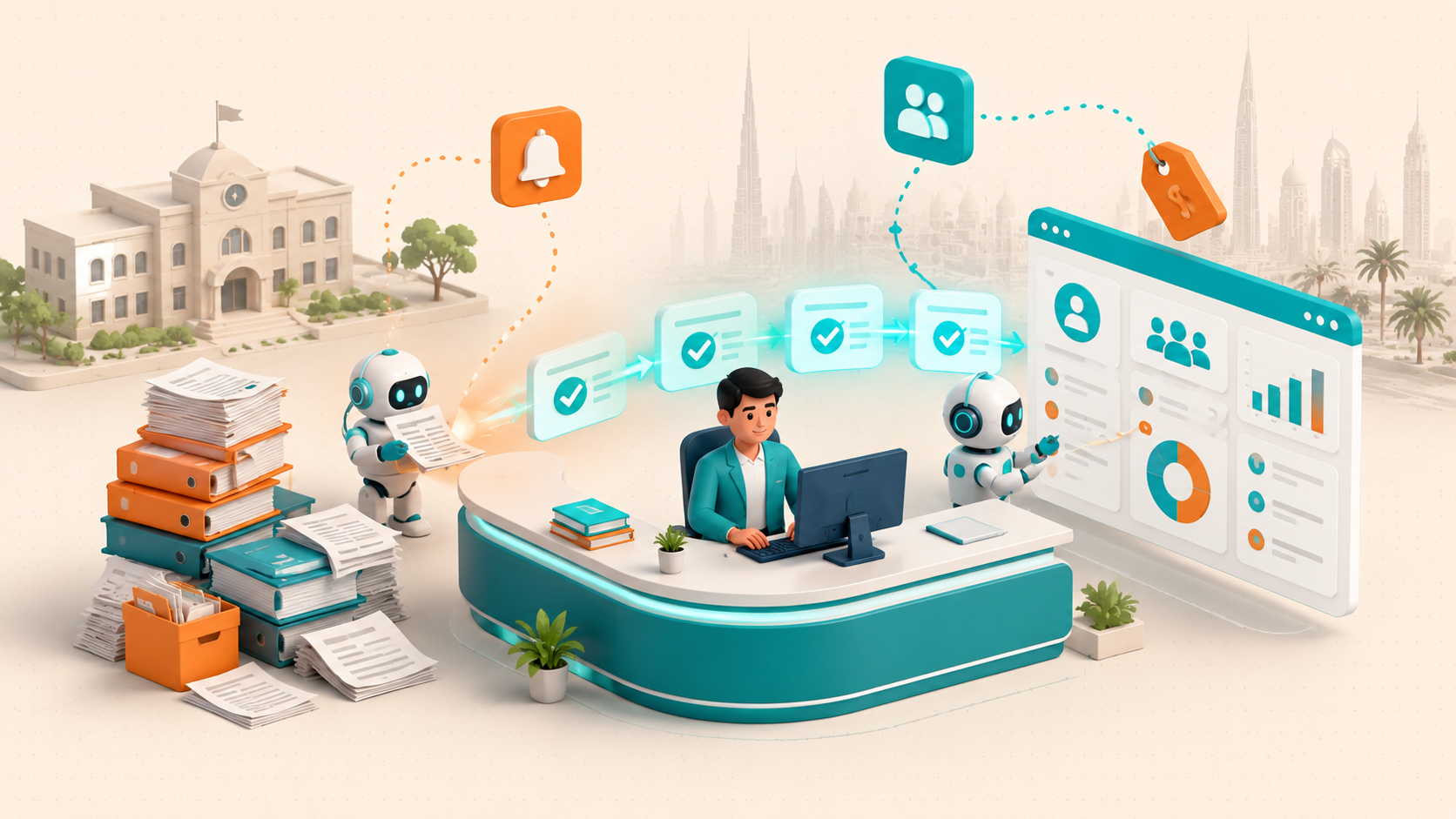
Custom eLearning Platform vs SaaS: When Off-the-Shelf Isn't Enough (2026)

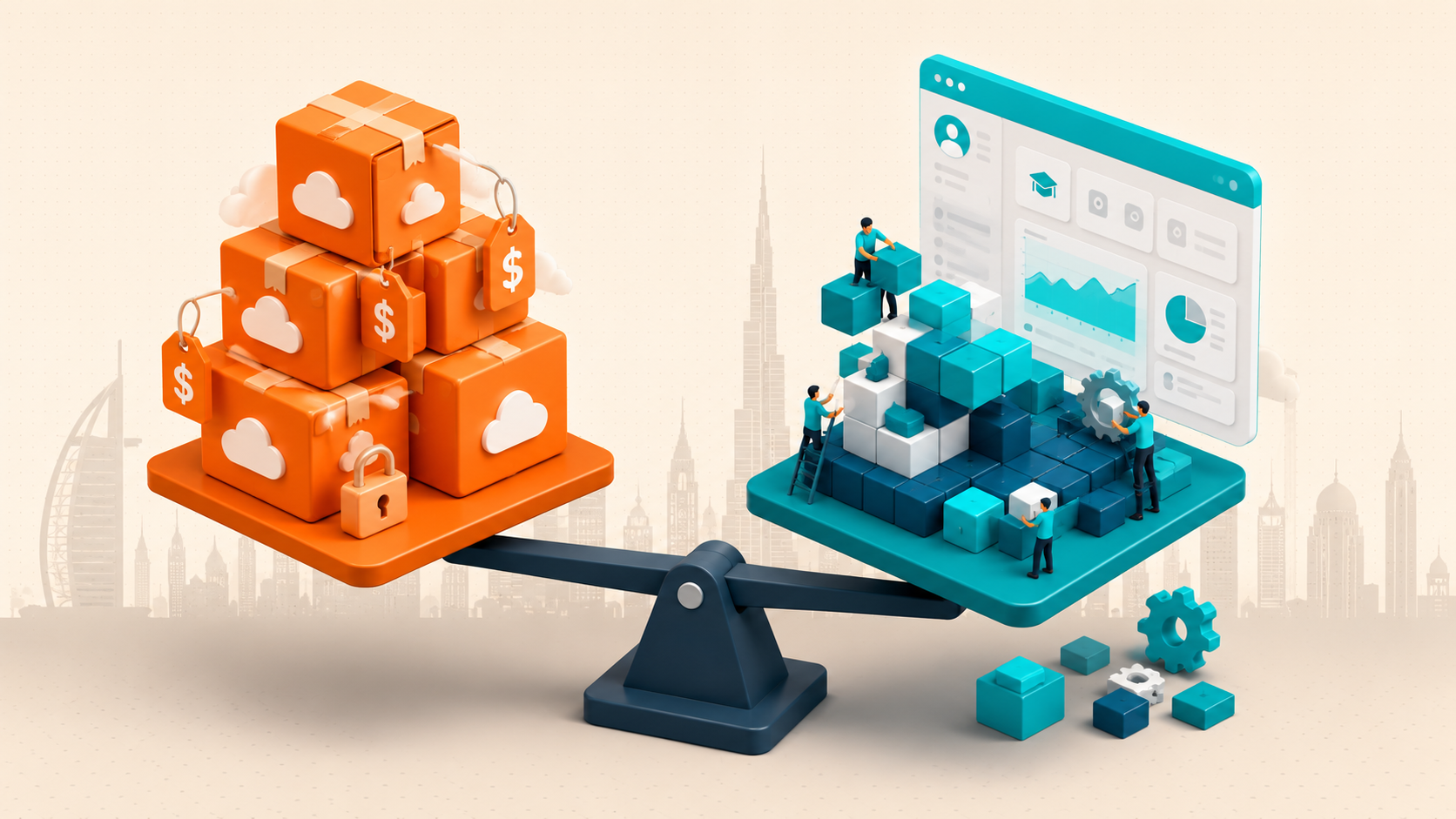
Every SaaS learning platform looks cheap on the first invoice and expensive on the fifth. For a training company or an enterprise L&D team, the build-vs-buy question is not really about features. It is about who owns the platform, how the cost behaves as you add seats, and what happens when the vendor's roadmap and yours stop matching.
This is a straight custom eLearning platform vs SaaS comparison for people who have to defend the decision to a CFO. We will put real 2026 pricing next to real build costs, show the five-year total cost of ownership, and mark the point where a SaaS eLearning platform is not enough for enterprise needs.
- SaaS wins on speed and low upfront cost; custom wins on ownership, integration depth, and cost control at scale.
- The break-even sits near 1,000 active users. Beyond that, recurring per-seat fees can outpace an amortized custom build over three to five years.
- Docebo enterprise contracts commonly run $60,000 to $250,000+ per year; a custom enterprise build runs $120,000 to $200,000+ once, plus 15 to 20% a year to maintain.
- Off-the-shelf stops being enough when you need proprietary integrations, data ownership, deep customization, or to sell training as your own product.
Why the Build-vs-Buy Question Comes Up Now
Two things push L&D leaders to reopen the build-vs-buy question. The first is scale: a per-user price that felt trivial at 200 learners is a board-level line item at 5,000. The second is fit: as training becomes core to the business, the gaps in a template platform start to cost real money in workarounds and lost time.
Buying is not wrong, and building is not brave. Each is a trade. The job is to know which trade your situation actually calls for, and to run the numbers over five years rather than one. For a deeper look at custom builds, TRT's custom LMS development services page walks through the engineering side.
What You Actually Get With SaaS, and Where It Stops
A SaaS LMS gives you a working platform in weeks, a vendor who handles hosting and updates, and a predictable subscription. For a stable team under about 1,000 users with standard training needs, that is hard to beat. TalentLMS aims at smaller teams with per-active-user tiers; Docebo targets mid-market and enterprise with larger annual contracts.
The catch is the pricing model and the ceiling. You pay per seat, forever, and the cost climbs with your headcount. You configure within the vendor's limits, integrate through the connectors they offer, and your data lives in their system on their terms.
Third Rock Techkno builds custom learning platforms and helps L&D teams model the five-year cost before they commit. Talk to our team →
The Real 5-Year Cost: Custom eLearning Platform vs SaaS
One-year pricing hides the decision. Five-year total cost of ownership reveals it. On the SaaS side, a custom enterprise LMS build runs $120,000 to $200,000+ once, then 15 to 20% of that a year to maintain, and the cost does not climb as you add learners. On the buy side, the subscription grows with every seat.
Here is the crossover the research keeps finding: past roughly 1,000 active users, recurring subscription fees can outpace the amortized cost of a custom build over a three-to-five-year window.
The point is not that custom is always cheaper. It is that the two lines cross, and where they cross depends on your seat count and growth. Under about 1,000 stable seats, SaaS usually stays ahead. Above it, or on a steep growth curve, a build you own starts to win, and it keeps winning because your cost stops scaling with headcount.
When a SaaS eLearning Platform Is Not Enough for Enterprise
Cost is only half the story. The other half is the wall you hit when a template platform cannot do what the business needs. In our custom LMS work, off-the-shelf tends to run out of road in five places.
- Per-seat pricing at scale. When you are adding thousands of learners, or extending training to partners and customers, per-user fees turn growth into a rising bill.
- Proprietary integrations. If learning has to talk to your HR system, product, or internal tools in ways the vendor's connectors do not support, you are stuck building around the platform.
- Data ownership and sovereignty. Regulated industries and enterprise security teams often need learner data in their own environment, not a vendor's multi-tenant cloud.
- Deep customization. When the workflow, branding, or learning model has to match your business exactly, configuration limits become daily friction.
- Training as a product. If you plan to sell or white-label courses, you need a platform you control, not one you rent by the seat.
None of these means SaaS is bad. They mark the line where renting stops making sense and owning starts.
Custom eLearning Platform vs Docebo and TalentLMS
Put side by side, the trade is clear. TalentLMS and Docebo give you speed and a managed service. A custom platform gives you control and a cost that does not scale with your headcount.
We build a five-year cost model for your specific headcount, growth, and integration needs before you decide. Get a build-vs-buy model →

Should You Build or Buy? A Decision Framework
Skip the feature checklist. The decision turns on four questions: how many seats, how fast you are growing, how deep your integration and data needs run, and whether training is a cost center or a product. Match your answers to the paths below.
What We Have Seen at TRT
Across our custom LMS builds, the tipping point almost always comes down to three things: seat-based pricing at scale, integration depth, and data ownership. Teams rarely regret buying SaaS to launch fast. Where regret shows up is year three, when the subscription has doubled with headcount and the platform still cannot do the one thing the business now depends on. The teams that build usually start after they have outgrown a SaaS tool, not before, so they know exactly what they need.
How to De-Risk a Custom Build
Building does not have to mean a two-year megaproject. The safe path is phased: prove the core, then grow it. This is close to how TRT approaches education and EdTech engineering in general.

The Bottom Line for L&D Leaders
Buy when speed matters more than control and your seat count is stable and modest. Build when you have outgrown the template, when per-seat fees are becoming a growth tax, or when learning is turning into a product you need to own. The custom eLearning platform vs SaaS choice is not ideology; it is a five-year spreadsheet.
Before you renew a SaaS contract or sign off on a build, model both over five years at your real seat count and growth rate. The right answer usually makes itself obvious once the two lines are on the same chart.

Frequently Asked Questions
Custom eLearning Platform vs SaaS: Which Is Cheaper?
It depends on seats and time. SaaS is cheaper to start and for stable teams under about 1,000 users. Past roughly 1,000 active users, per-seat fees can outpace a custom build over three to five years. For example, 1,000 users at about $50 each per year is $250,000 over five years (Cleveroad, 2026), which can exceed a custom enterprise build you own outright.Should I Build or Buy an eLearning Platform for My Company?
Buy SaaS if you need a fast launch, have a stable user base under about 1,000, standard training needs, and limited engineering capacity. Build custom if you need proprietary integrations, data ownership, deep customization, or plan to sell training as a product, or if per-seat fees will outpace a build within three to five years.What Is the Total Cost of Custom eLearning vs SaaS Over 5 Years?
A custom enterprise LMS build runs about $120,000 to $200,000+ once, plus 15 to 20% a year to maintain, and does not scale with headcount. A SaaS enterprise plan runs about $25,000 to $100,000+ a year, or $60,000 to $250,000+ for Docebo enterprise, and rises as you add seats (Educate-Me and Cleveroad, 2025-2026). Model both at your real seat count.Custom eLearning Platform vs Docebo and TalentLMS: What Is the Difference?
TalentLMS targets smaller teams with per-active-user tiers; Docebo targets mid-market and enterprise with larger annual contracts. Both are rented per seat, hosted by the vendor, and configured within their limits. A custom platform is built once, owned by you, integrates with anything, and has a cost that stays flat as you grow.What Are the Advantages of a Custom eLearning Platform Over Ready-Made?
Ownership of the platform and the data, unlimited and proprietary integrations, full control of the workflow and branding, no per-seat fee that scales with headcount, and the option to monetize or white-label the training. The trade is a higher upfront cost and a longer time to launch than a ready-made SaaS tool.When Is a SaaS eLearning Platform Not Enough for Enterprise?
When per-seat pricing at scale turns growth into a rising bill, when you need integrations the vendor's connectors do not support, when data must live in your own environment for compliance, when configuration limits block the workflow you need, or when you want to sell training as your own product.