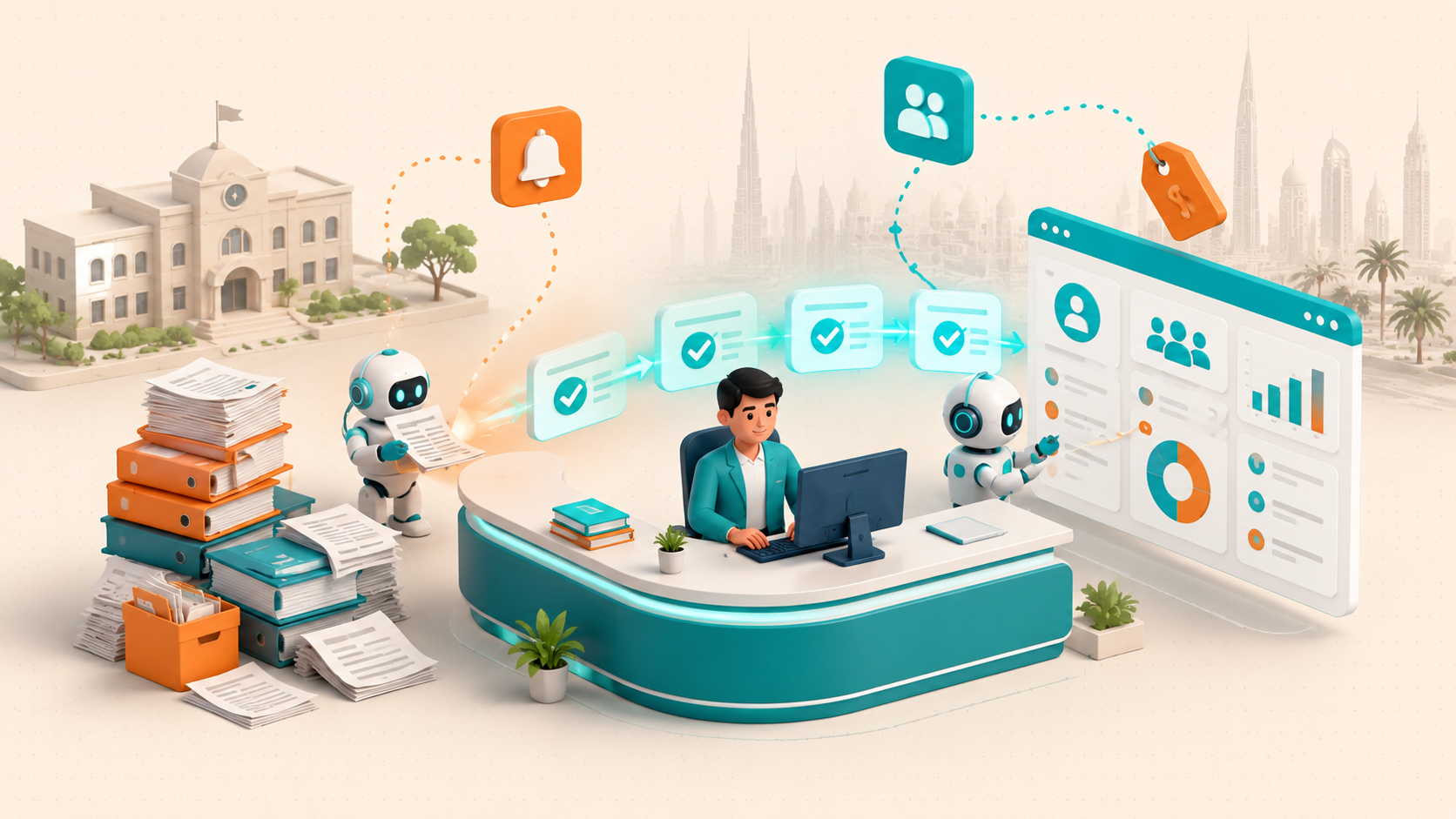
Leveraging AI for Next-Gen Education: Crafting Adaptive Content in 2026

Most courses still teach to the middle of the room. The fast learners get bored, the ones who are behind get lost, and everyone gets the same slides regardless of what they already know. Adaptive content flips that. Instead of one fixed lesson, you build material that reshapes itself around each learner easier examples for someone struggling, a harder challenge for someone who has already mastered the basics, a video for one student and a worked problem for another. The idea is old. What changed is that AI now makes it affordable to produce.
This guide is written for EdTech teams, instructional designers, and institutions who want to actually build adaptive content in 2026 not just talk about it. You will see what adaptive content is, how AI generates and personalizes it, where it pays off across K12, higher education, and corporate training, and how to stand up a working pipeline. We will also be honest about the parts that go wrong: accuracy, bias, and the quality control that keeps a well-meaning system from teaching the wrong thing.
Quick answer
Adaptive content is learning material that changes based on who is using it — the pace, difficulty, examples, and format shift to match each learner. In 2026, AI makes this practical at scale: large language models draft and rewrite material, tagging systems label it, and learner data decides what to serve next. Done well, it raises engagement and mastery while cutting the hours creators spend building variations.
What adaptive content is, and why it matters in 2026
Adaptive content is learning material designed to change based on the learner. A static lesson looks identical for everyone. An adaptive lesson has moving parts the difficulty of a question, the wording of an explanation, the choice of example, the format of the content, and the order topics appear in.
A system decides which version to show based on what it knows about the person: their prior score, how long they spent, what they got wrong, and what they said they wanted to learn.
It helps to separate two things people often blur together. Personalization is the outcome the learner gets material that fits them. Adaptivity is the mechanism the content and the system react to live signals and adjust. You can personalize without being adaptive (a fixed track chosen once at signup). True adaptive content keeps adjusting as the learner moves.
Three shifts made 2026 the year this became normal rather than experimental:
- Content is now cheap to produce in variations. A language model can rewrite one explanation at three reading levels in seconds, so building alternatives is no longer the bottleneck it was.
- Adoption crossed the line. Roughly 85% of teachers reported using AI during the 2024-25 school year, per research from Microsoft and McKinsey, with lesson planning and generating classroom materials among the top uses. The tools are already in the workflow.
- The market is funding it. Precedence Research values the adaptive learning software market at about USD 2.97 billion in 2026, on the way to roughly USD 12.15 billion by 2035 at a 16.94% CAGR. That kind of growth pulls in platforms, tooling, and talent.
The practical reason it matters is simpler than any market number. When content meets learners where they are, they stay. When it is too hard or too easy, they leave. Adaptive content is the most direct lever you have on both engagement and mastery, and AI is what makes producing it realistic for a team of normal size.
How AI generates and personalizes learning content
Under the hood, an adaptive content system is four cooperating pieces: a generator that creates and rewrites material, a tagging layer that describes every piece, a data layer that tracks the learner, and a decision layer that connects the two. Skip any one and the whole thing degrades into a fancy quiz.
Large language models as the content engine
Large language models do the heavy lifting on production. Give one a learning objective and a source text, and it will draft an explanation, generate three practice questions at increasing difficulty, rewrite a paragraph for a lower reading level, translate it, or turn a dense passage into a short scenario. The same objective can produce a worked example, a hint ladder, and a summary the raw variations adaptive delivery depends on.
The catch is that a raw model output is a draft, not a lesson. It needs to be grounded in your approved material, checked against the objective, and reviewed before it reaches a learner. Teams that treat model output as finished content are the ones who get burned. Teams that treat it as a fast first draft get the speed without the mess.
Content tagging and metadata
Adaptive delivery is only as good as the labels on your content. Every piece a question, a video, a paragraph needs metadata: which objective it serves, its difficulty, its format, its prerequisites, and its reading level. AI speeds this up by auto-tagging material at scale, then a human corrects the edge cases. Without clean tags, the system has no way to know that this easier example is the right thing to show a struggling learner.
Learner data and knowledge graphs
The data layer captures signals as the learner works: scores, time on task, mistakes, hesitation, and self-reported goals. A knowledge graph then maps how concepts relate — which skills are prerequisites for which, and where a gap in one topic will block progress in another. When a learner misses a question, the graph helps the system trace the miss back to a root concept instead of just marking it wrong and moving on.
The decision layer sits on top. It reads the learner model, checks the tagged content library, and picks the next best piece a remedial explanation, a harder problem, or a different format. This is where personalization stops being a marketing word and becomes an actual routing decision made many times per session. If you are weighing how much of this to build versus buy, a focused AI in education consultation early on saves months of rework.
The benefits: engagement, mastery, and creator efficiency
Adaptive content earns its keep in three places. Two show up in learner outcomes. The third shows up in your team's calendar.
- Engagement. Content pitched at the right difficulty keeps people in the productive zone challenged but not defeated. That is the difference between a course someone finishes and a tab they close.
- Mastery. Because the system closes gaps individually instead of teaching to the average, learners spend their time on what they actually do not know, and move faster through what they do.
- Creator efficiency. This is the benefit that gets undersold. Building variations by hand is brutal; AI collapses that work. Gallup and the Walton Family Foundation found that teachers using AI tools weekly save around 5.9 hours a week the kind of time that turns adaptive content from a nice idea into something a real team can maintain.
There is a compounding effect worth naming. Every learner interaction generates data, and that data improves the tagging, the difficulty estimates, and the routing. A well-built adaptive system gets better the more it is used, which is not true of a static course that ages the moment you publish it.
It is also worth being precise about what these benefits are not. Adaptive content does not replace teaching, and it does not magically fix a badly designed curriculum. If the underlying objectives are fuzzy or the source material is weak, adaptivity just delivers that weakness more efficiently to each learner. The gains are real, but they sit on top of good instructional design they do not substitute for it.
Use cases across K12, higher education, and corporate training
The same core idea looks different depending on who is learning and why. Here is where adaptive content is doing real work in 2026.
K12: closing gaps without singling kids out
In K12, adaptive practice lets a class work on the same topic while each student gets problems matched to their level. A child who has not mastered fractions gets more scaffolding; a child who has moves on to word problems.
The teacher gets a dashboard showing who is stuck and where, so intervention is targeted instead of guessed. The social win matters too differentiation happens quietly, without publicly sorting kids into groups.
Higher education: scale without losing the individual
Large lecture courses are where adaptive content shines, because the instructor cannot personally coach 300 students. Adaptive homework and reading adjust to each student's pace, and the professor gets a read on which concepts the whole cohort is struggling with before the exam, not after.
Usage backs this up: a Higher Education Policy Institute survey found 92% of higher education students now use generative AI in some form, up from 66% in 2024. The students are already there; the opportunity is to make that use structured and academically sound.
Corporate training: relevance and speed to competence
In corporate learning, time is money and generic training wastes both. Adaptive content lets an experienced hire skip what they already know and lets a new one get extra reps, so nobody sits through a module they do not need.
Compliance and product training benefit most, because roles differ and the content can adapt to each role's context. Teams delivering this through a modern learning experience platform can tie completion and competence data straight back to performance.
| Content type | How AI adapts it | Example |
|---|---|---|
| Explanations | Rewrites the same concept at different reading levels and with different examples | A struggling learner sees a plain-language version with a real-world analogy; an advanced one sees a concise, technical version |
| Practice questions | Adjusts difficulty and generates fresh variants based on recent performance | After two correct answers, the system serves a harder problem; after a miss, an easier scaffolded one |
| Feedback and hints | Generates targeted, concept-specific feedback instead of a generic 'incorrect' | A wrong fraction answer triggers a hint about common denominators, not just a red X |
| Format | Switches between text, video, worked example, or interactive based on what the learner responds to | A learner who skips text but finishes videos starts getting video-first lessons |
| Learning path | Reorders topics and inserts remediation using the knowledge graph | A gap in prerequisites reroutes the learner to that skill before continuing |
Illustrative examples of AI-driven adaptation across common content types.
How to build an adaptive-content pipeline
A pipeline is the assembly line that turns a learning objective into adaptive material a learner receives. Build it as distinct stages, not one giant tool, so you can improve each stage independently.
- Authoring and generation. Start from clear objectives. Use AI to draft explanations, questions, and variations against approved source material, always with a human editor in the loop.
- Tagging and structuring. Label every piece with objective, difficulty, format, prerequisites, and reading level. Auto-tag with AI, then spot-check. This metadata is the fuel for everything downstream.
- The adaptive engine. This is the decision layer that reads the learner model and picks the next piece. It can be rules-based to start and grow into a model-driven recommender as you collect data.
- LMS or LXP integration. The content and the engine have to plug into the platform learners already use, and pass progress data back so records stay in one place. Standards like xAPI and LTI matter here.
- Measurement and feedback. Track whether adaptation actually improves outcomes, and feed that back into tagging and generation. A pipeline that does not measure itself will drift.
A common mistake is buying an engine before the content is tagged well. The engine is not your problem in month one clean, well-labelled content is. Get the authoring and tagging stages solid on a single course, prove the loop works, then invest in a more sophisticated engine. If you want the underlying models and infrastructure built properly, AI development services can handle the generation and recommendation layers while your instructional team owns the pedagogy.
The challenges: accuracy, bias, and quality control
Adaptive content fails quietly. A static course that is wrong is wrong for everyone and gets caught. An adaptive system can serve a bad explanation to a specific slice of learners and nobody notices for weeks. That is why the control layer is not optional.
Factual accuracy and grounding
Language models can produce confident, fluent, wrong content. In education that is dangerous because learners assume the material is correct. The defense is grounding generate only against approved source material, and route every AI-drafted piece through subject-matter review before it goes live. Speed is the point of AI; unreviewed output is not the way to get it.
Bias and fairness
Adaptive systems make decisions about people, and biased data produces biased decisions. If a difficulty estimate or a routing rule quietly disadvantages a group of learners, you have automated unfairness at scale. Audit who gets routed where, check that examples and language are inclusive, and watch for a system that consistently pushes certain learners onto easier or slower tracks.
Quality control and teacher oversight
The best adaptive systems keep a human in charge. Teachers and instructional designers need visibility into what the system is serving, the ability to override it, and a way to flag bad content. Treat AI as a co-pilot that drafts and suggests, with an educator who approves and corrects. The goal is to give teachers more time and reach, not to remove their judgment from the loop.
Getting started without boiling the ocean
You do not need a full adaptive platform to begin. The teams that succeed start narrow, prove the loop, and expand. Here is a sane order of operations:
- Pick one course and one clear objective. Choose something with obvious difficulty variation — early math, a language skill, a compliance module.
- Build a small tagged content library. Create a handful of variations per concept and tag them properly. Quality of tags beats quantity of content.
- Start with simple rules. A basic if-wrong-then-remediate rule delivers most of the value before you ever need machine learning.
- Measure against a control. Compare adaptive learners to a standard group so you know the adaptation is actually helping.
- Expand what works. Once one course proves out, reuse the pipeline instead of rebuilding it.
The organizations getting real results in 2026 are not the ones with the biggest AI budget. They are the ones who treated adaptive content as an engineering and pedagogy problem together clean objectives, well-tagged material, a modest engine, and educators kept in control. If you build education software with those fundamentals in place, the adaptivity takes care of itself.
One last piece of advice: pick a metric that matters before you write a line of content. Completion rate, time to mastery, or fewer support tickets are all fair game, but decide up front what success looks like. Adaptive content is easy to make impressive in a demo and hard to prove in production, and the teams that keep their funding are the ones who can point to a number that moved.
Building adaptive learning content in 2026?
Third Rock Techkno builds AI-driven adaptive learning products end to end — content generation, tagging, adaptive engines, and LMS/LXP integration — with educators kept in control. Tell us who your learners are and we'll scope it with you.
Get a free project estimate →Frequently asked questions
What is adaptive content in education?
Adaptive content is learning material that changes based on the learner — the difficulty, examples, format, and pace shift to match each person's needs. A system decides which version to show using data like prior scores, mistakes, and time on task, so the content stays at the right level as the learner progresses.
How does AI create adaptive learning content?
AI, mainly large language models, drafts and rewrites material — generating explanations at different reading levels, practice questions at varying difficulty, hints, and summaries from approved source content. A tagging layer labels each piece, learner data tracks performance, and a decision layer picks the next best piece. Human educators review and approve before content reaches learners.
Is AI-generated learning content accurate enough to trust?
Only with guardrails. Language models can produce fluent but incorrect material, so the content must be grounded in approved sources and reviewed by subject-matter experts before going live. Treat AI output as a fast first draft, not a finished lesson. That grounding-plus-review approach is what keeps accuracy high while still saving time.
What is the difference between personalization and adaptivity?
Personalization is the outcome — the learner receives material that fits them. Adaptivity is the mechanism — the content and system react to live signals and keep adjusting as the learner works. You can personalize once at signup without being adaptive, but true adaptive content keeps changing throughout the learning experience.
How do we start with adaptive content without a huge budget?
Start narrow. Pick one course and a clear objective, build a small well-tagged library of content variations, and use simple if-wrong-then-remediate rules before adding machine learning. Measure adaptive learners against a control group to confirm it helps, then reuse the pipeline on the next course. Clean tags and clear objectives matter more than a big engine.