ChatGPT Integration for EdTech Platforms: What Buyers Need to Know in 2026
A 2026 buyer's guide to ChatGPT integration for EdTech: use cases, RAG integration, real OpenAI API costs, ChatGPT vs a custom model, and the risks.


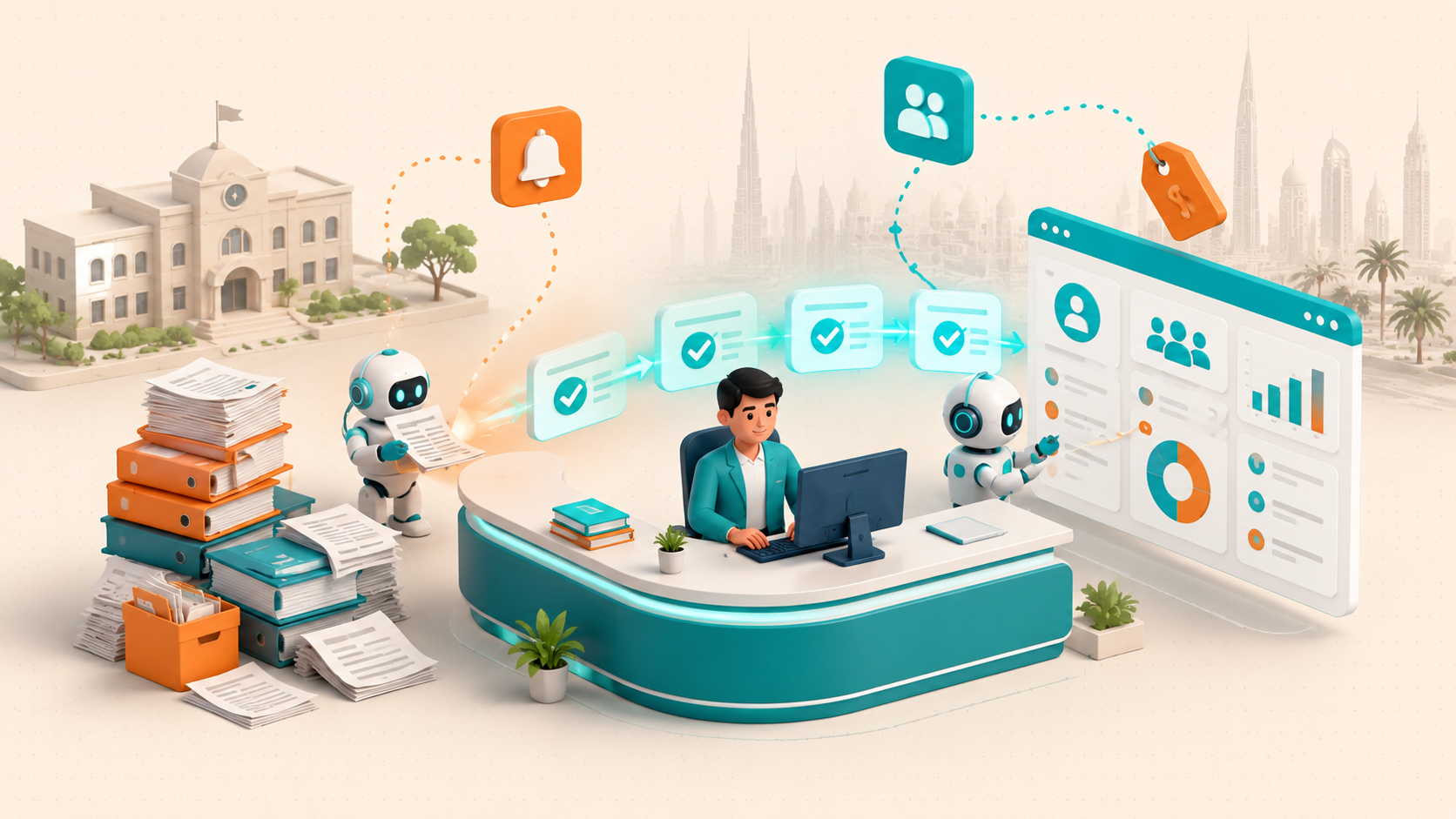
ChatGPT integration for EdTech platforms is the work of wiring OpenAI's models into your product so it can tutor, generate content, answer questions, or grade, without your team training a model from scratch.
For most product teams that is the appeal: you get frontier AI behind an API call rather than a research lab. The catch is that "just call the API" hides every decision that actually decides whether your feature ships, scales, and stays affordable.
The ground also shifted this year. OpenAI began winding down its self-serve fine-tuning platform in May 2026, blocking new users and steering teams toward prompt caching and smaller base models instead, per OpenAI's deprecations notice. If your integration plan still starts with "we'll fine-tune a model," it is already out of date. The rest of this guide is the version that is not.
- ChatGPT integration is an architecture decision: which model, retrieval over your content, and how you control cost and data.
- With self-serve fine-tuning being wound down in 2026, retrieval-augmented generation (RAG) is the sensible default for most EdTech features.
- Model choice is your biggest cost lever: 2026 tokens range from $0.20 to $30 per million, so a tutor on the wrong model can cost 25 times more.
- Use the OpenAI API when speed and capability matter; consider a custom or open-weight model when data privacy, scale economics, or on-premise rules demand it.
- The risks that sink projects are hallucination, student-data handling, prompt injection, runaway cost, and vendor lock-in, all manageable if planned for.
Quick answer
Integrating ChatGPT or similar LLMs into an EdTech platform adds AI tutoring, content generation, grading support and conversational help. In 2026 it boosts engagement and scale, but needs guardrails for accuracy, safety, privacy and cost. This guide covers how to do it right.
What ChatGPT Integration for EdTech Actually Means in 2026
Buyers often picture "ChatGPT integration" as dropping a chat window into their app. That is the smallest part. A real integration is three layers: the model that generates text, the retrieval system that feeds it your course content, and the guardrails that keep it safe, accurate, and within budget. Skip any layer and you get the demo that wows the board and falls over in production.
The reason this matters now is the broader market pull. The AI in education market is projected to reach about $9.58 billion in 2026, according to Precedence Research, and most of that spend is teams adding AI to products that already exist rather than building new ones.
If you run an LMS or eLearning platform, a course marketplace, or a tutoring app, the question is no longer whether to integrate AI, but how to do it without lighting your margin on fire.
The honest framing for a CTO is this: you are not buying intelligence, you are renting it by the token and wrapping it in engineering. The model is a commodity that gets cheaper and better every quarter. Your retrieval, your prompts, your safety layer, and your cost controls are the parts that are actually yours.
The ChatGPT Use Cases for EdTech Worth Building
Not every AI feature earns its keep. These are the integrations that consistently pay back for education products, roughly in order of how quickly users feel them.
- AI tutoring and Q&A. A student asks a question and gets a guided answer grounded in your course material, not the open internet. It is the flagship use case, the one behind most generative AI in education use cases, and the one parents and learners notice first.
- Content and assessment generation. Quizzes, practice problems, lesson outlines, and flashcards produced from a chapter in seconds. The win is variation at scale, not just speed.
- Grading and feedback. Drafting specific, consistent written feedback on student work, with a human reviewing before it lands. It returns the hours teachers spend on the marking pile.
- Search and answers over your content. Retrieval-augmented question answering across your library, so a learner gets the one relevant paragraph instead of 40 search results.
- Summarization and study aids. Turning a long lecture or PDF into a summary, key points, or an audio recap, which is exactly the slow part of going to market with content.
- Support and onboarding chat. Answering the repetitive product and course questions that flood your support inbox at enrollment time.
- Accessibility. Reading level adjustment, translation, and plain-language rewrites that widen who can use your platform.
The pattern across all of them is the same: the model is most useful when it is pointed at your content, not asked to know everything. That is why retrieval, covered below, is the architecture decision that matters most.
We integrate OpenAI and build the retrieval and safety layers around it. See our AI development services →
How to Integrate ChatGPT Into an eLearning Platform
There are three ways to make a model speak your domain, and in 2026 the order you try them in has changed. Here is the sequence we use, and why.
The reason retrieval beats training for most EdTech is timing. As Elastic's RAG-versus-fine-tuning analysis puts it, retrieval suits content that changes weekly or faster, while tuning suits stable style and behavior.
School and course content updates constantly, so retrieval wins. When OpenAI's own custom-model work with the legal tool Harvey was done, the team tested prompting, retrieval, and tuning before landing on a blend, reaching an 83% increase in factual responses.
In EdTech, the clearest proof point is Khan Academy's Khanmigo, an AI tutor built on the OpenAI API that guides students with questions instead of handing over answers, exactly the grounded, retrieval-shaped pattern this guide describes. The lesson for a product team is to earn each layer of complexity, not assume it.
A fair question at this point is how long this takes. For a focused feature, an MVP with the API and basic retrieval is usually a few weeks of work, not months, because you are assembling proven parts rather than inventing them.
The time goes into the unglamorous bits: cleaning and chunking your content for retrieval, building an evaluation set so you can prove accuracy rather than guess at it, and wiring the cost and safety controls.
A backend engineer paired with someone who knows your content can ship a credible first version fast. What takes longer is hardening it for tens of thousands of users, so plan for the hardening, not just the demo that got everyone excited.
What ChatGPT Integration Costs for an EdTech Platform
This is where good integrations and expensive ones part ways. OpenAI charges by the token, and the model you pick swings the bill by more than an order of magnitude. The budget GPT-5.4 nano runs about $0.20 to $1.25 per million tokens, the mid-tier GPT-5.4 sits near $2.50 to $15, and the GPT-5.5 flagship runs $5 to $30, with Batch and Flex modes cutting that roughly in half, per CloudZero's 2026 pricing breakdown.
Put that in EdTech terms. A single tutoring exchange might use a couple of thousand tokens once you include the retrieved context. Multiply by tens of thousands of students each month and the model choice becomes the difference between a feature that funds itself and one that eats your margin.
The same tutor on nano versus the Pro tier can differ by 25 times in cost for output that, for most homework questions, a student would not be able to tell apart.
The levers that actually control the bill are practical:
- Right-size the model per task. Use a small model for classification, routing, and simple Q&A, and reserve the flagship for genuinely hard reasoning.
- Cache aggressively. Prompt caching and cached-input pricing cut repeat costs sharply, which matters when thousands of students ask similar things.
- Use Batch mode for non-urgent work. Bulk content generation and grading do not need to be instant, and batch pricing rewards that.
- Trim the context. Good retrieval sends the three relevant chunks, not the whole textbook, which is both cheaper and more accurate.
The mistake we see most is a team benchmarking on the flagship in a demo, loving it, and shipping it to production without ever testing whether a model a tenth of the price would have done the job. The demo is free; the rollout is metered.
We design AI features that stay affordable as your user base grows. Explore our EdTech development work →
ChatGPT vs a Custom AI Model for Your EdTech Platform
This is the decision behind the format of this guide, and it is more nuanced than "use ChatGPT." The OpenAI API gives you the strongest models with no infrastructure to run. A custom or open-weight model that you host gives you control and data privacy at the cost of real engineering. Here is the head-to-head.
The rule we give clients: start on the OpenAI API with retrieval, because it gets you to learning fastest, then move some or all of the workload to an open-weight model you host only when a specific reason forces it. Match your situation to the call below.
The Risks Every Buyer Must Check Before Integrating
The features are the fun part; the risks are what get a CTO a difficult meeting. Walk through these before you sign anything.
Hallucination and Accuracy
A model will state a wrong fact with total confidence, and in education that is not a quirk, it is a liability. Retrieval grounded in your content cuts this sharply, and a human review step on anything graded or certified closes the rest of the gap. Never let raw model output reach a student as truth without a check.
Student Data and Privacy
Sending student records to any external API puts you under data-protection law, whether that is FERPA in the US or PDPL in the GCC. Use a data-processing agreement, avoid sending personally identifiable information where you can, confirm the API will not train on your data, and check data-residency requirements before a single record leaves your system.
Prompt Injection
The moment your AI reads user-supplied or retrieved content, someone can hide instructions in it to make the model misbehave. This is a real attack surface for any RAG system over user uploads, and it needs input sanitization and output validation, not hope.
Runaway Cost and Vendor Lock-In
Token bills can spike overnight with a usage surge or a buggy loop, so rate limits, budgets, and monitoring are not optional. And building everything tightly around one provider makes switching painful later. Abstract the model layer so you can move between OpenAI and an open-weight model without rewriting your product, because the one certainty in this market is that prices and leaders will change.
What We Have Learned Building AI Into EdTech
We build this for ourselves and for clients, which is the only reason we have opinions worth charging for. Our Learnly AI turns a PDF into question papers, flashcards, and audio lessons, and Sourcebook turns any document into interactive learning. Both lean on the same pattern this guide describes: a strong base model, retrieval over the source content, tight prompts, and a safety layer, with model choice tuned to keep cost sane at volume.
The thing we tell every product team is that the model is the easy part, a point that holds across the wider AI in education landscape too. The features that last are the ones with disciplined retrieval, real evaluation, and a cost model that survives a hundred thousand users. A team that nails those can swap the underlying model every six months and only get better. A team that skips them ships an impressive demo and a support nightmare.
What to Settle Before You Write a Line of Integration Code
Decide three things before you start: which use case you are solving and how you will measure it, whether retrieval over your own content is in scope from day one, and what your data and cost rules are.
Get those right and ChatGPT integration for EdTech becomes an engineering project with a known shape rather than an open-ended experiment. If you want a partner who has built these systems and will tell you honestly when the API is enough and when it is not, see how we approach AI development services, or talk to our team about your integration.

Bringing AI into your school or EdTech product? Third Rock Techkno offers AI in education consulting and builds custom education software and learning platforms — from strategy through deployment. Book a free consultation.