AI Student Assessment Platforms in 2026: Best Tools, Core Features, and When to Build Custom


A 2024 report from HolonIQ found that 58% of higher education institutions had adopted or piloted at least one AI-powered assessment tool. Fewer than 20% reported being satisfied with the fit between that tool and their actual exam workflows. The gap is not in the technology. It is in the selection and architecture decisions made before the software is deployed.
This guide gives school admins, university exam coordinators, and EdTech founders a practical map of the AI student assessment platform landscape in 2026. It covers what these platforms actually do (and how they differ from AI proctoring tools), the features that matter most by use case, the leading off-the-shelf options, and when it makes sense to build a custom platform rather than buy.
- AI assessment platforms and AI proctoring software solve different problems: conflating them wastes budget and creates compliance exposure
- Custom AI assessment platform development costs $80K–$450K depending on adaptive engine complexity, integration scope, and analytics depth
- The 50,000-student threshold is a useful break-even benchmark: above that volume, a custom build often costs less over three years than per-student SaaS pricing
- FERPA compliance in the US and GDPR compliance in the EU require contractual data residency commitments from vendors. Claims in sales decks are not sufficient.
- EdTech founders should treat AI grading as a configurable module built on rubrics, not a default LLM setting. Rubric-driven scoring outperforms generic models on domain-specific content
Quick answer
An AI student assessment platform automates grading, generates questions, gives instant feedback and analyzes performance to guide instruction. In 2026 it saves teacher time and personalizes learning, while educators keep oversight of scoring and high-stakes decisions.
What an AI Student Assessment Platform Actually Does in 2026
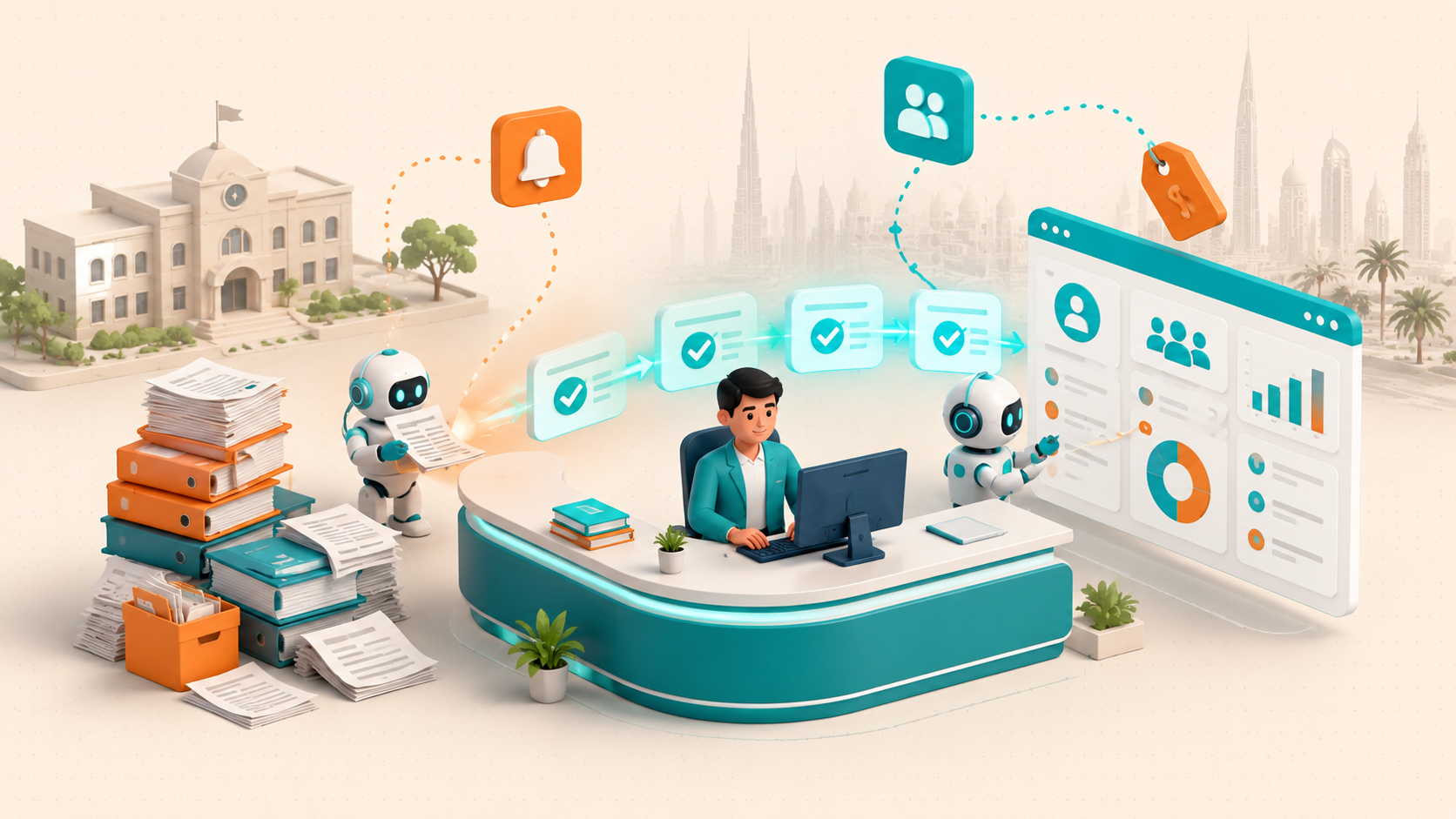
An AI student assessment platform is software that uses artificial intelligence to design, deliver, score, and analyze tests and assignments across any learning environment. The AI component handles several distinct functions, and most platforms do not do all of them with equal depth.
Before evaluating any tool, your team needs to define which of these functions you are actually buying:
- Adaptive question delivery: Difficulty adjusts in real time based on student responses, using item response theory (IRT) or machine learning models trained on question performance data across large student populations
- Automated grading: Natural language processing (NLP) models score short-answer, essay, and coding responses against instructor-defined rubrics, flagging low-confidence cases for human review
- AI question generation: Large language model (LLM) based creation of multiple-choice, fill-in-the-blank, and scenario-based questions generated from source material such as syllabus documents, textbook chapters, or lecture notes
- Performance analytics: Cohort-level dashboards showing mastery gaps, time-on-task, and predictive risk scores, often surfaced as early-intervention alerts for instructors and academic advisors
- LMS integration: Grade passback to Moodle, Canvas, Blackboard, D2L, or a custom LMS via the LTI 1.3 standard
What these platforms do not do: monitor or prevent academic dishonesty during an active exam session. That is the function of AI proctoring software: a separate product category with different underlying infrastructure, different compliance obligations, and a different pricing model.
What We Have Seen at TRT
At Third Rock Techkno, when clients approach us about building assessment features into their EdTech products, the first question we ask is: "What does a graded result need to trigger?" The answer, whether it is LMS grade passback, a certification issuance, a remediation workflow, or a regulatory report, determines the entire architecture before a single line of code is written.
Institutions that skip this conversation tend to rebuild their grade passback logic partway through the project. That rebuild typically adds four to six weeks to the timeline and costs more than the original scoping session would have. The architectural question is cheap to answer at the start and expensive to answer after delivery.
AI Proctoring Software vs. AI Assessment Platform: The Difference That Changes Your Budget Decision
This distinction is where most institutions spend money they should not spend. Clarity here is worth a dedicated section.
AI proctoring software monitors students during an exam. Webcam feeds, screen recording, browser lockdown, keystroke analysis, and identity verification are the core mechanisms. The question it answers: "Is this student cheating right now?"
AI assessment platforms design and score the exam itself. The question they answer: "Did this student learn the material, and how do we know?"
These are built on fundamentally different technical infrastructure, subject to different data protection regulations: biometric data under GDPR Article 9 versus standard educational records under FERPA, and priced on different models (per session for proctoring versus per-seat or institutional license for assessment).
Several vendors now bundle basic assessment features into their proctoring suites, with Honorlock being the most common example. This bundling is a commercial decision, not evidence that a proctoring company has deep expertise in adaptive testing or NLP-based grading. Evaluate the bundled assessment feature against standalone platforms before assuming it meets your requirements.
For EdTech founders specifically: Build your assessment layer first and add proctoring as a third-party integration. Proctoring requires a separate compliance stack for biometric data handling that includes state-level laws in the US and GDPR in the EU. Building proprietary proctoring adds $100K or more in computer vision and compliance work, a cost that few startups can justify before product-market fit.
Our team at Third Rock Techkno has delivered custom EdTech platforms and AI assessment systems for 50+ clients. Talk to TRT's EdTech team →
Best AI Assessment Tools for Schools and Universities in 2026
The 2026 AI assessment market has settled into three tiers based on institution size and use case. The right tool for a K-12 district is unlikely to be the right tool for a research university, and neither is right for an EdTech startup building assessment as a product feature.
Tier 1: Enterprise University Platforms
Inspera Assessment is the strongest pure-play assessment platform for higher education in 2026. It covers question authoring, automated grading, and detailed analytics with solid LTI integration and native GDPR compliance. The product is Norwegian-built, which means European data protection is in the architecture rather than patched on. Pricing is institutional: $50K–$200K annually for mid-to-large universities (based on TRT competitive research as of mid-2026; verify directly with Inspera).
Gradescope (Turnitin) is the standout choice for graded work in STEM subjects. Its AI grading for handwritten math and coding assignments consistently outperforms NLP-based competitors because it was trained on academic problem sets rather than general text corpora. Canvas and Blackboard integration is clean and well-documented. Pricing runs approximately $3–5 per student per course (pricing subject to change post-Turnitin acquisition; verify current terms directly), which scales well at mid-size institutions.
Respondus is widely used in North American higher education, primarily for browser lockdown and LMS integration. Its assessment feature set is thinner than Inspera or Gradescope, but its deep integration with Blackboard makes it a default choice for procurement teams at Blackboard-heavy institutions.
Tier 2: School and District-Level Platforms
Formative targets K-12 with real-time assessment during class. Teachers assign questions during a lesson and see student responses as they arrive. AI features include automatic question generation from uploaded course documents and auto-scoring for supported response types. Pricing: $2,000–$8,000 per school annually (verify current tiers at formative.com).
Edulastic focuses on standards-aligned benchmark testing for school districts. Its mapping to Common Core and NGSS standards is stronger than most competitors at this tier, and its district-level reporting dashboards are designed for school board presentations rather than just instructor views. Pricing is typically $8,000–$20,000 per year for mid-size districts on a district license (Edulastic is now part of Quizizz; verify current pricing directly).
Tier 3: Online Course and EdTech Startup Platforms
Learnosity is the most developer-friendly assessment infrastructure layer available in 2026. It delivers APIs and SDKs rather than a finished product, which is exactly what EdTech founders need. If you are building assessment features into your platform, Learnosity gives you question rendering, automated scoring, and analytics without building from scratch. Learnosity does not publish pricing publicly; contact their sales team for a volume estimate based on your question and response volume.
For AI quiz and test platforms targeting online learning courses, QuizGecko, Quizizz, and Kahoot!'s AI question generator offer LLM-powered quiz creation at $15–$99 per month. These work well for engagement-focused formative assessment but are not suited to high-stakes certification or summative exams.
Features That Separate Good AI Assessment Platforms from Great Ones
The right feature checklist depends entirely on your role. A district IT administrator evaluating Formative needs different criteria than a university registrar evaluating Inspera or a founder integrating Learnosity.
For School Admins and District-Level Buyers
- Standards alignment automation: Can the platform map questions to your state or national curriculum standards without manual tagging by teachers?
- Accessibility compliance: WCAG 2.1 AA is non-negotiable for public school deployments. Get contractual confirmation backed by an accessibility audit, not just a checkbox in the RFP response.
- Rostering via Clever or ClassLink: Manual student roster import is an ongoing maintenance burden. Automated rostering cuts term-start setup from days to hours and eliminates the mis-enrollment errors that create support tickets every semester.
- Offline capability: Districts with unreliable internet connectivity need platforms that cache locally and sync when connection returns, not platforms that fail silently during rural exam sessions.
- Data residency confirmation: US-based student data covered under FERPA (Family Educational Rights and Privacy Act) must be stored in US data centers. Get this commitment in the contract language, not the sales deck.
For University Exam Teams
- Adaptive testing with IRT: True adaptive delivery uses item response theory to select questions based on calibrated item difficulty and the student's real-time ability estimate. "Easy, medium, hard branching" based on a threshold score is not IRT-based adaptive testing.
- Handwritten response grading: For math, physics, chemistry, and language exams, AI grading of handwritten or non-typed responses is the highest-value feature in 2026. Most NLP-based platforms do not handle this well. Gradescope is currently the benchmark.
- Summative assessment coverage: Confirm the platform handles both formative (classroom check-ins) and summative (end-of-term, high-stakes) assessment delivery in a single system rather than requiring separate tools.
- Exam banking and version control: A university running 30 exam sessions per term needs version management, parallel form generation, and blueprint-based item selection, not a shared folder.
- Concurrent user load capacity: A platform that performs at 500 students and degrades at 5,000 is a liability. Ask vendors for documented load test results at your actual exam-day volume before procurement.
- SIS integration: Grade passback to Banner, Ellucian, or PeopleSoft is often the make-or-break requirement for large institutions. Confirm the integration is native and not reliant on manual CSV export.
For EdTech Founders
- API-first architecture: You need to embed assessment into your product without redirecting users to a third-party interface. If the vendor's API documentation is thin or poorly maintained, the product was not designed for integration.
- White-label options: Your brand on the assessment experience. Not the vendor's.
- Rubric configurability: Can instructors define custom grading criteria for the AI scoring model, or is the grading logic a black box? Configurable rubrics are critical for domain-specific content where generic LLM grading produces unreliable scores.
- Grading latency under load: AI grading pipelines carry real latency. Ask for the p95 grading time for a 500-word response under your expected concurrent submission volume before committing to an integration.
Our team at Third Rock Techkno has delivered custom AI assessment and EdTech product engineering for 50+ clients. Talk to TRT's EdTech team →
Custom AI Assessment Platform Development Cost in 2026
Most articles give a range of "$50K–$500K" without explaining what moves the number. Here are the actual variables, based on scoping engagements at Third Rock Techkno for EdTech clients across 2025 and 2026.
Variables That Actually Drive Development Cost
Question types supported: MCQ and true/false grading is algorithmically simple and inexpensive to build. NLP-based grading of short-answer and essay responses costs four to six times more and requires ongoing model fine-tuning against your domain's rubric definitions. Generic LLMs grade domain-specific content poorly without that fine-tuning.
Adaptive engine complexity: A simple branching logic ("if score above 70%, serve harder questions") costs $15K–$30K to build. A true IRT-based adaptive engine with calibrated item banks and real-time difficulty adjustment costs $80K–$150K and typically requires a psychometrician to validate item calibration, a specialized role that adds time to the project even when the engineering is done.
Proctoring integration: If AI proctoring is a requirement, integrate a third-party service (ProctorU API, Proctorio SDK) rather than building it in-house. Proprietary proctoring adds $100K or more in computer vision and biometric data compliance work. That scope only makes sense if proctoring is a core product differentiator, not a supporting feature.
LMS and SIS integrations: Each LTI 1.3 integration (Canvas, Moodle, Blackboard, D2L) adds $5K–$15K in development and QA. SIS integrations (Banner, Ellucian, PeopleSoft) are more involved: $20K–$40K each, with significant testing overhead at production data volumes.
Analytics depth: A basic performance dashboard covering scores, time-on-task, and cohort averages costs $20K–$40K to build. Predictive analytics using ML models (early intervention flags, grade forecasting, learning gap identification at the individual student level) costs $60K–$120K and requires a historical dataset large enough to train on meaningfully.
Realistic Cost Ranges for 2026
- MVP (MCQ + short-answer NLP grading + basic analytics + one LMS integration): $10K–$30K, 4–6 months
- Mid-tier (NLP grading + adaptive engine + multi-LMS integration + reporting): $30K–$50K, 7–10 months
- Full platform (IRT-adaptive + predictive analytics + SIS integration + multi-tenant architecture): $50K–$80K, 12–18 months
These ranges assume a dedicated team of three to five engineers, one product manager, and one QA lead, building on a cloud-based architecture (AWS or GCP). They do not include ongoing maintenance, which typically runs 15–20% of the initial build cost annually, meaning a $200K build carries approximately $30K–$40K in annual maintenance costs.
The three-year total cost of ownership (TCO) comparison between custom and SaaS is where the build decision usually becomes defensible. For institutions crossing $120K–$180K in annual SaaS fees, the custom build typically shows lower TCO by year three, while also delivering data residency control and IP ownership that SaaS licensing never provides.
How to Make Your Platform Decision This Quarter
The choice between buying an AI student assessment platform and building one is not primarily a budget question. It is a question of whether your assessment workflow is a core product differentiator or a commodity capability.
Buy when speed and standardization outweigh differentiation. No school should build a custom platform when Formative or Edulastic will cover 90% of its requirements and can deploy in weeks. Build when the assessment experience is central to your product or institution's competitive position, and when no existing vendor has solved your specific workflow correctly.
If you are an EdTech founder evaluating your AI student assessment platform options: start with Learnosity or a similar API layer for your first 10,000 users. Use that period to identify precisely where off-the-shelf limits your product experience. Build custom on those specific dimensions once you understand the gap from real usage data, not the full stack from day one.
The institutions we have worked with that report the highest satisfaction from their AI student assessment platform deployments have one thing in common: they aligned the platform's data model to their actual grading and reporting workflows before deployment, not after. That alignment is cheap to get right at the project start. Fixing it after launch costs 30–50% of the original project budget. Getting the architecture question right is the highest-return conversation you can have before any contract is signed.

Bringing AI into your school or EdTech product? Third Rock Techkno offers AI in education consulting and builds custom education software and learning platforms — from strategy through deployment. Book a free consultation.
Frequently Asked Questions
What is the difference between AI proctoring software and an AI student assessment platform?
AI proctoring software monitors student behavior during an active exam session using webcam feeds, screen recording, browser lockdown, and identity verification. Its purpose is exam integrity during the test event. An AI assessment platform designs, delivers, and scores the exam itself, using NLP for automated grading, adaptive algorithms for question delivery, and dashboards for learning analytics. They are separate product categories built on different infrastructure with different compliance requirements. Proctoring handles GDPR Article 9 biometric data; assessment handles standard FERPA-covered educational records. Several vendors bundle both, but the bundled implementation is rarely as strong as a dedicated tool in either category.
How much does it cost to build a custom AI assessment platform in 2026?
Based on TRT's scoping engagements: an MVP platform with MCQ and short-answer NLP grading, one LMS integration, and basic analytics costs $80K–$130K and takes 4–6 months with a dedicated team. A mid-tier platform with adaptive testing and multiple integrations costs $150K–$250K over 7–10 months. Full platforms with IRT-based adaptive engines, SIS integration, and predictive analytics run $280K–$450K over 12–18 months. Ongoing maintenance adds 15–20% annually. The three-year TCO comparison with SaaS typically becomes favorable to a custom build above 50,000 students.
What are the best AI assessment tools for schools and universities in 2026?
For higher education: Inspera Assessment (native GDPR compliance, strong analytics, LTI integration) and Gradescope (AI grading for handwritten STEM responses, Canvas and Blackboard integration). For K-12 schools and districts: Formative (real-time classroom assessment with AI question generation) and Edulastic (standards-aligned benchmark testing with district reporting). For EdTech founders building assessment as a product feature: Learnosity is the most API-friendly infrastructure layer available, offering question rendering, scoring, and analytics SDKs.
Can AI automatically grade essay-type student responses?
Yes, with important qualification. NLP-based grading of short-answer and essay responses is in commercial use at scale in 2026. Platforms like Gradescope and Inspera use rubric-driven scoring where instructors define expected concepts and the model scores semantic alignment. Low-confidence responses are flagged for human review rather than auto-submitted. Educause research reports a 40% reduction in grading time for large cohorts using this model. The critical variable is rubric quality: generic LLM grading without a configured rubric produces unreliable results on domain-specific academic content.
What compliance requirements apply to AI assessment platforms in education?
In the US, FERPA governs student educational records. Assessment platforms must store US student data in US data centers, and vendor contracts must include data processing agreements. In the EU and UK, GDPR applies to all student data. If AI proctoring is involved, GDPR Article 9 imposes additional requirements for biometric data including consent and data minimization. The EU AI Act, in force from August 2026, applies to AI grading systems used for consequential academic decisions and requires transparency and human oversight provisions.
How long does it take to build a custom AI assessment platform?
An MVP with standard question types, basic NLP grading, and one LMS integration takes 4–6 months with a dedicated team of three to five engineers. Mid-tier platforms with adaptive testing and multiple LMS integrations take 7–10 months. Full-featured platforms with IRT-based adaptive engines, SIS integration, and predictive analytics take 12–18 months. The biggest timeline driver beyond engineering scope is item calibration for adaptive engines, which requires a psychometrician and a validated item bank before the adaptive logic can be tested meaningfully.
What AI assessment features matter most for higher education?
University exam teams should evaluate: IRT-based adaptive testing (not just difficulty branching), handwritten response grading for STEM and language exams, concurrent user capacity at actual exam-day student volumes, native SIS integration to Banner or Ellucian, and exam banking with version control and parallel form generation. WCAG 2.1 AA accessibility compliance and FERPA data residency commitments must be confirmed in contract language, not just in RFP responses. Predictive analytics covering student risk scoring is a high-value secondary feature for institutions with student success or retention programs.