What Is Adaptive Learning and Why Does It Matter in Every Classroom in 2026

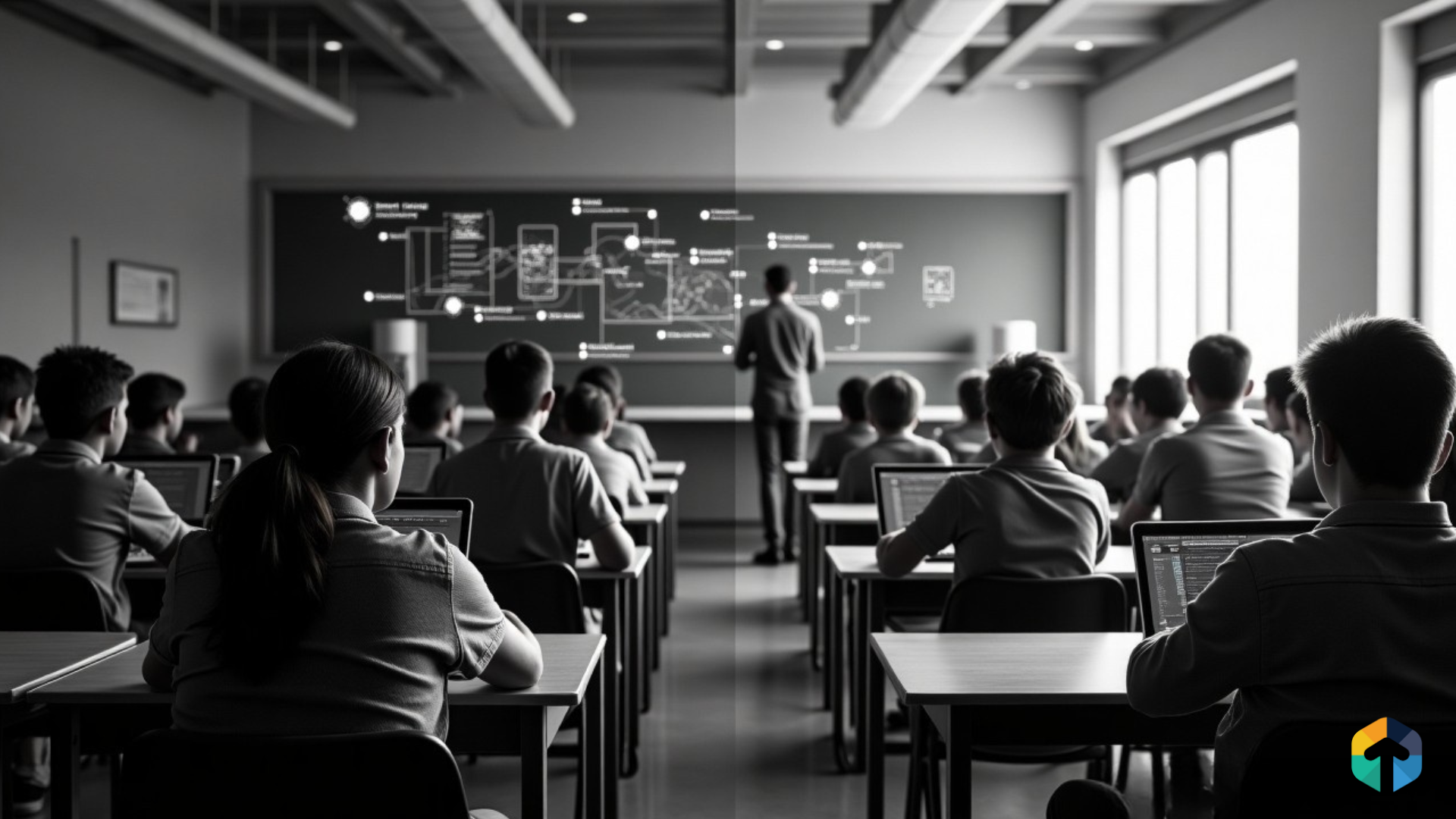
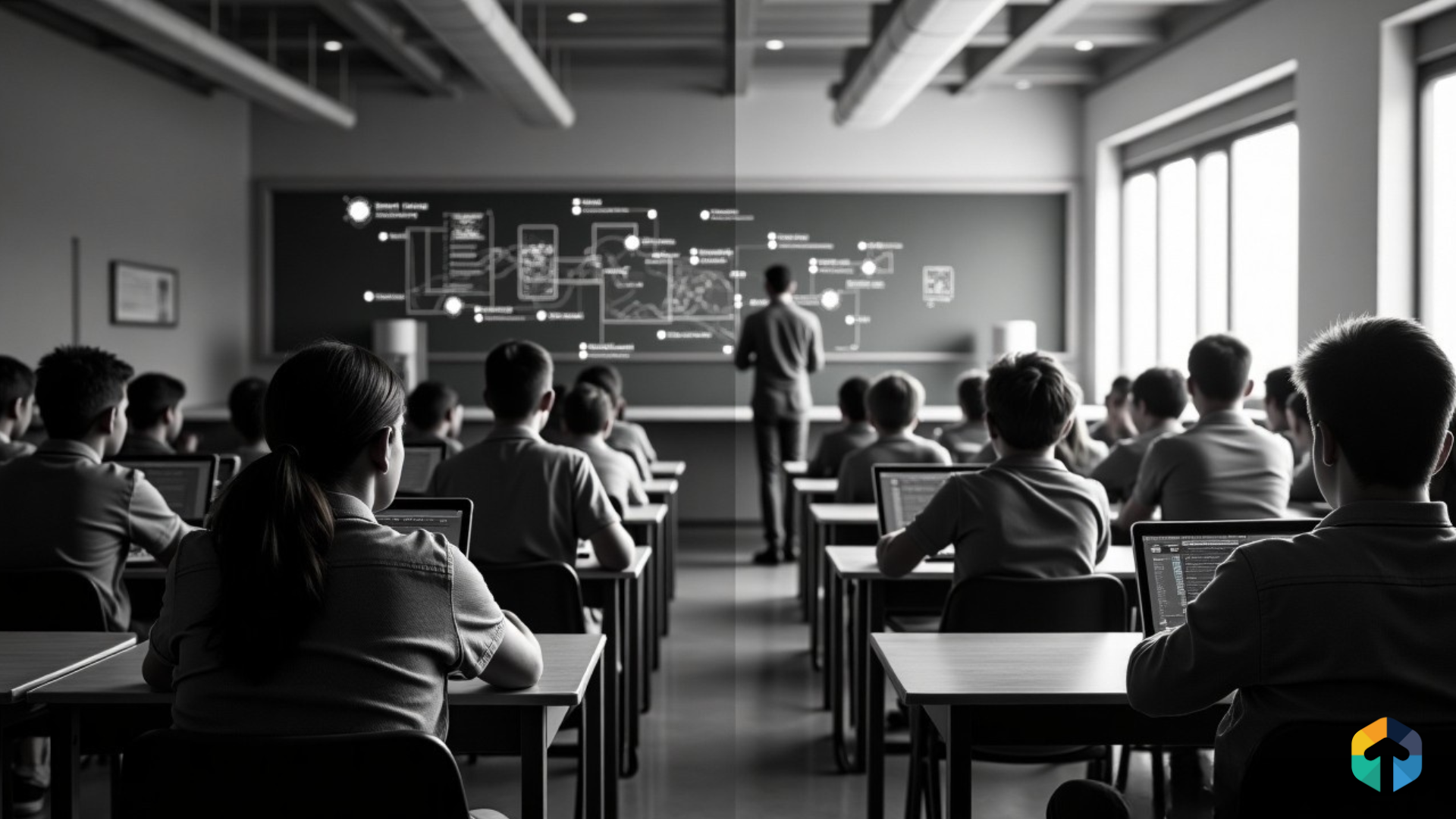
Consider a classroom where every student receives exactly the right lesson at precisely the right moment, where struggling learners get additional support without feeling left behind, and where gifted students are challenged without being held back. This isn't educational fantasy. It's the reality that adaptive learning technology is creating in classrooms worldwide.
The most compelling evidence comes from an unexpected source. A landmark 45-year study called the Study of Mathematically Precocious Youth (SMPY) tracked 5,000 of America's brightest students: the top 1%, 0.1%, and even 0.01% of all learners.
The finding that surprised researchers? Even genius-level students needed personalized guidance to reach their full potential. Gifted students who were academically accelerated (for example by skipping a grade) were about 60% more likely to earn a patent or doctorate than equally talented peers who were not (Bernstein et al., 2019, Nature).
If personalization matters this much for the brightest minds, consider its impact on every student in your classroom.
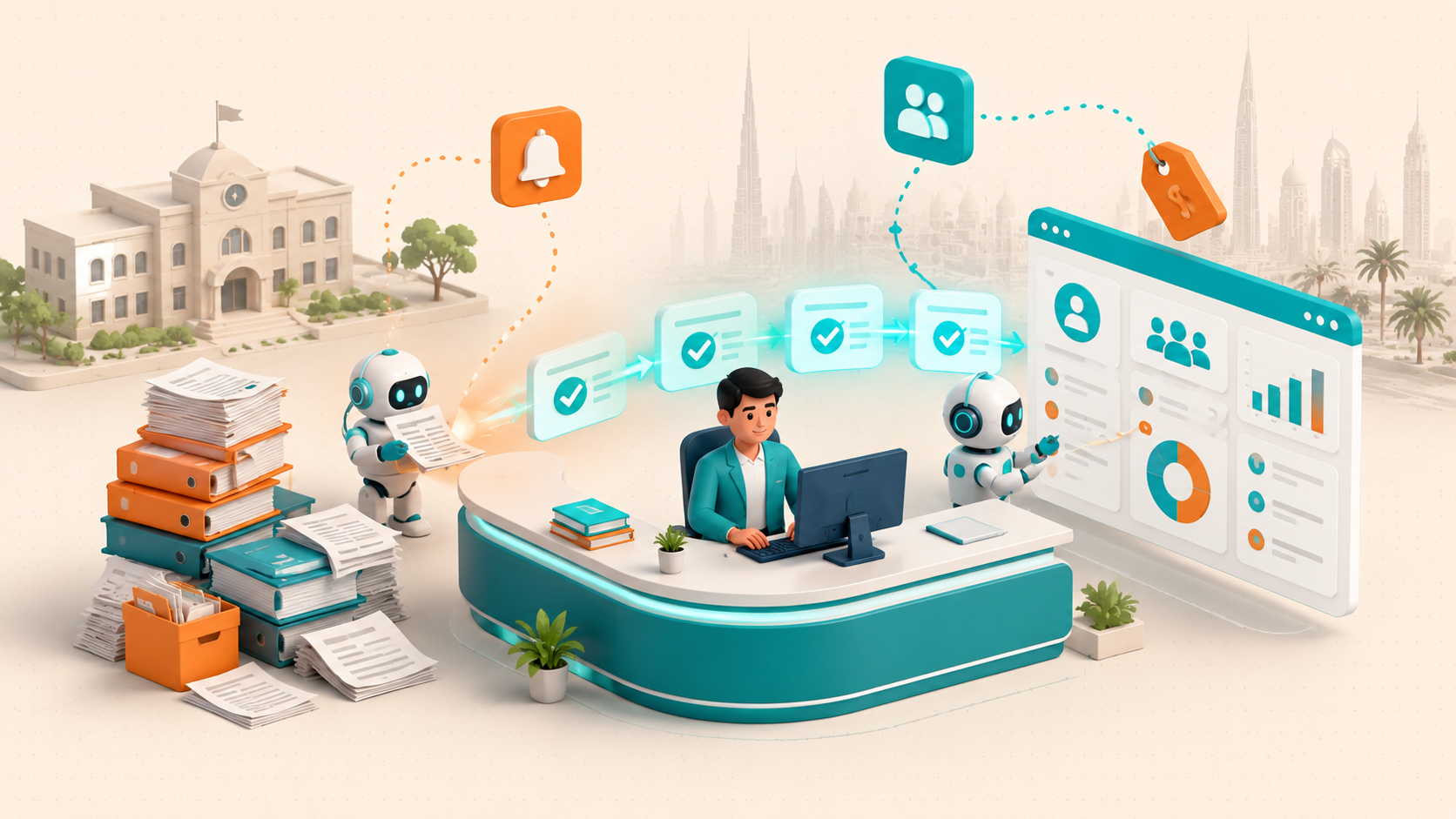
- Adaptive learning uses AI to adjust content, pacing, and assessments for each student in real time, with no manual teacher configuration required.
- ASU's College Algebra pass rate rose from 57% to 79% after moving to adaptive courseware (Inside Higher Ed, most recently published benchmark).
- The global adaptive learning market is projected to exceed $5.2 billion in 2026 (Business Research Insights), driven by K-12 and higher ed adoption.
- Teachers benefit from real-time dashboards that flag struggling students before end-of-unit tests, shifting teaching from reactive to proactive.
- Platforms like DreamBox (85% student growth improvement) and Lexia Core5 (25% vocabulary gains) show measurable per-platform outcomes.
- Data privacy review (FERPA, COPPA, GDPR) must be completed before any platform purchase, confirmed in writing with each vendor.
Quick answer
Adaptive learning in education uses AI to tailor lessons, pacing and practice to each student's performance, so learners get the right challenge at the right time. In 2026 it improves engagement and outcomes across K12 and higher-ed by closing knowledge gaps individually instead of teaching to the middle of the class.
The Personalization Crisis in Modern Education
Traditional education operates on a deeply flawed assumption: that all students learn the same way, at the same pace, with the same methods. Yet every educator knows this is not true. In a typical classroom of 30 students, you will find learners who grasp concepts instantly alongside those who need additional practice, visual learners mixed with auditory processors, and students with vastly different cultural and linguistic backgrounds.
Educational technology has promised solutions for decades, but most tools have digitized the same one-size-fits-all approach without fixing its core flaw. Adaptive learning changes that by letting the technology handle the differentiation: adjusting content, difficulty, and pacing for each student automatically, based on how they respond to the material.
What is adaptive learning technology?
Adaptive learning is an educational methodology that uses artificial intelligence and machine learning to personalize learning experiences for individual students in real time. Unlike traditional digital learning tools that follow predetermined paths, adaptive learning systems continuously analyze student performance, engagement patterns, and learning preferences to dynamically adjust content, pacing, and instructional approaches.
Picture a highly experienced teacher who instantly recognizes when a student is struggling with fractions, understands exactly why they're confused, and immediately provides the right combination of visual aids, practice problems, and scaffolding exercises. This teacher never gets tired, never overlooks a student, and can simultaneously personalize instruction for hundreds of learners at once.
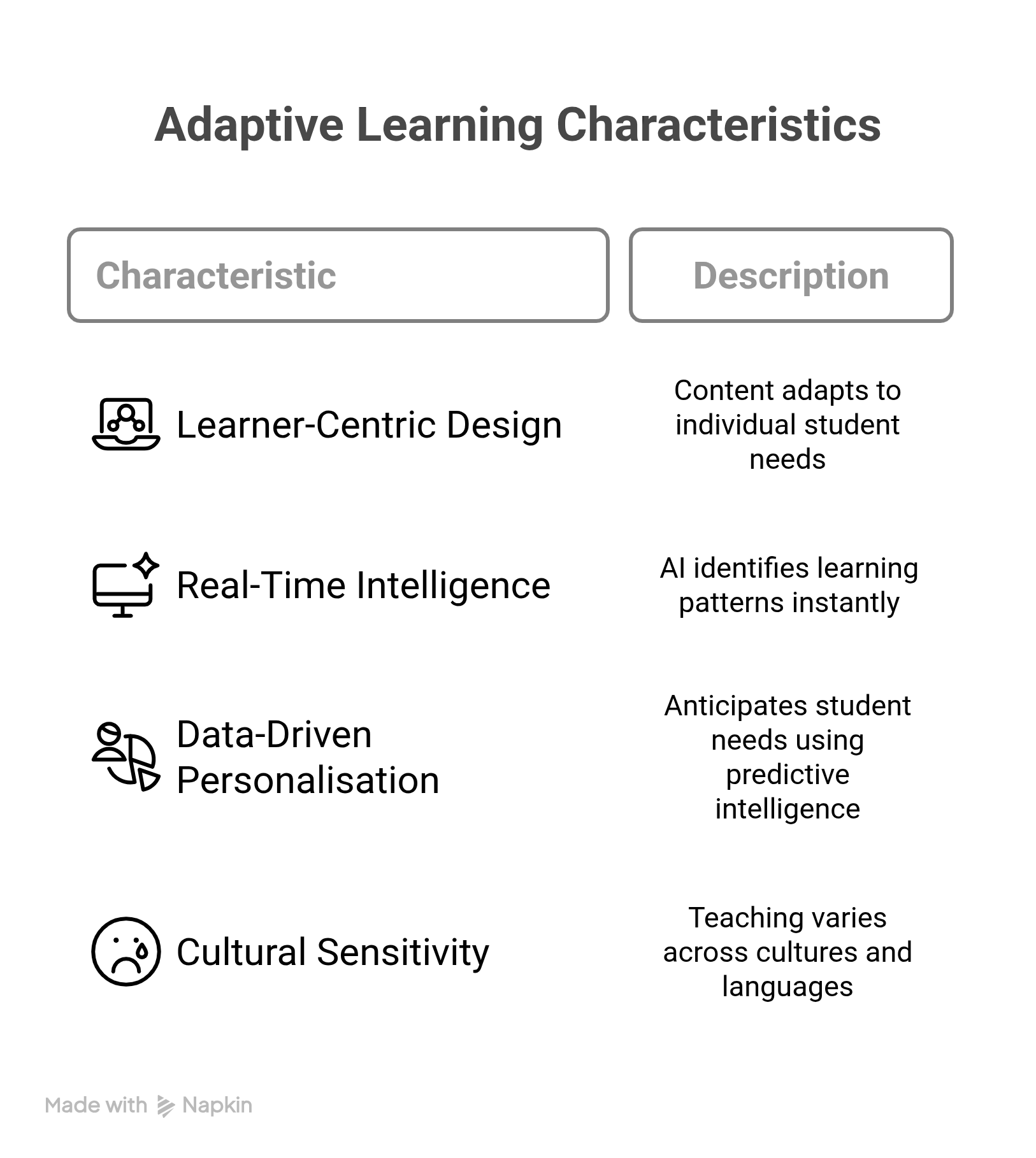
Key Characteristics of Adaptive Learning
Learner-Centric Design: The technology adjusts to meet student needs, not the other way around. Content adapts to each learner's zone of proximal development, that sweet spot where learning is challenging but achievable.
Real-Time Intelligence: Using educational AI, the system continuously processes data about how students interact with content, identifying patterns invisible to human observation. Is a student rushing through material without comprehension? Are they spending excessive time on concepts they've already mastered? The AI notices and responds instantly.
Data-Driven Personalization: Every click, pause, correct answer, and mistake becomes data that informs future learning paths. It is predictive intelligence that anticipates student needs before problems become visible, not just passive data collection.
Cultural Sensitivity: The best adaptive learning software accounts for the fact that effective teaching varies across cultures, languages, and learning communities. It adjusts not just to individual cognitive patterns but to the cultural contexts that shape how students learn.
TRT's EdTech engineering team has built AI-powered learning systems for institutions across the US, UAE, and GCC. Talk to our team →
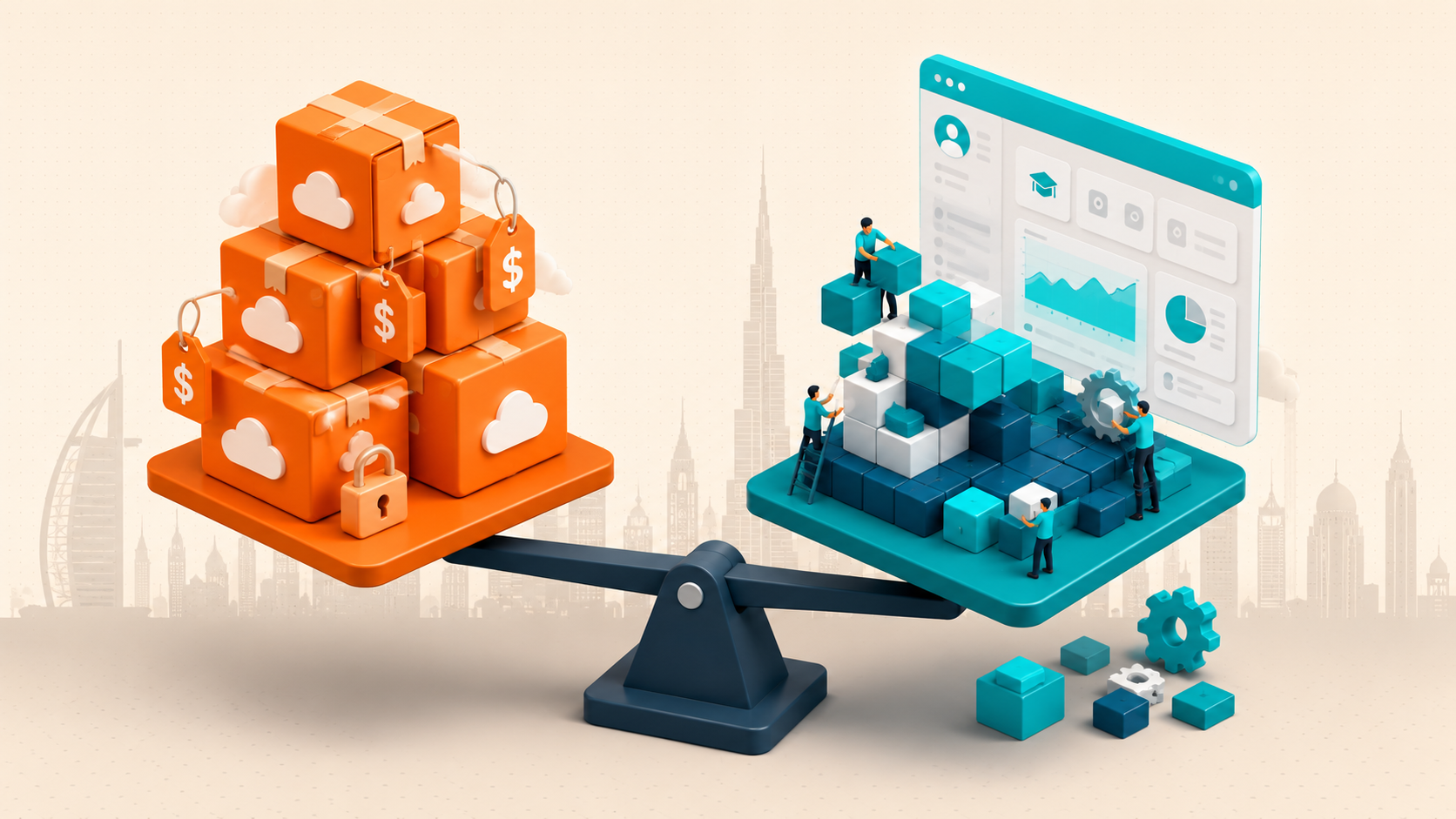
Adaptive Learning vs Traditional Learning
Take TRT's free AI readiness assessment to understand your technical requirements, budget considerations, and implementation timeline before committing to a platform. Take the assessment →
The Technology Behind Educational Transformation
Modern adaptive learning platforms use machine learning algorithms that process large volumes of educational data. These systems analyze patterns from thousands of previous learners to understand how different types of students respond to various instructional approaches. When a new student shows similar patterns, the AI applies what worked for comparable learners while continuing to measure and refine the fit.
For example, if the system finds that visual learners in algebra consistently struggle with word problems but succeed when the same concepts are presented through geometric representations, it will automatically shift struggling students toward visual approaches while maintaining algebraic rigor.
Real Time Assessment and Adjustment
Traditional assessment happens after learning: end-of-chapter tests, quarterly exams. Adaptive assessment tools embed evaluation automatically into the learning experience itself. Every interaction becomes a micro-assessment that informs the next learning moment.
This continuous feedback loop enables what educators call "just-in-time" intervention. Instead of discovering learning gaps weeks later through summative assessments, teachers receive immediate alerts when students need support, preventing small struggles from becoming major learning deficits.
Learning Analytics Dashboards
Real-time learning analytics for educators transform how teachers understand their classrooms. Sophisticated dashboards surface insights like:
- Which concepts are causing widespread difficulty across the class?
- Individual students who may need additional support or acceleration.
- Optimal timing for introducing a new concept based on class readiness.
- Effectiveness of different teaching materials and approaches.
Types of Adaptive Learning Customizations

Personalized learning pathways adjust not just what students learn, but how they learn it. Visual learners might receive the same algebra concept through interactive graphs and geometric representations, while analytical learners get step-by-step logical proofs. Kinesthetic learners can manipulate virtual objects to understand the same mathematical relationships.
This is not about reducing content difficulty. It is about presenting rigorous academic material in ways that connect with individual learning preferences and strengths.
Intelligent Sequencing
Traditional curricula follow linear progressions: students move from Chapter 1 to Chapter 2 to Chapter 3. Adaptive learning technology accounts for the fact that learning is not linear. Some students may master advanced concepts while still working on foundational skills. Others may need to revisit basic concepts several times before they are ready for advancement.
Intelligent sequencing creates individualized learning progressions that ensure true mastery while maintaining appropriate challenge levels. A student might work on advanced probability while simultaneously receiving additional practice with basic fractions, whatever combination best serves their learning trajectory.
Dynamic Assessment Adaptation
Adaptive assessment tools for teachers transform how we measure student understanding. Instead of identical tests for all students, adaptive assessments adjust question difficulty in real time based on student responses.
If a student demonstrates mastery of basic concepts, the assessment automatically presents more challenging problems. If they struggle, it provides additional scaffolding questions to pinpoint exactly where understanding breaks down.
This approach provides far more precise diagnostic information while reducing test anxiety and improving the overall assessment experience.
Transforming Teaching and Learning: Real Classroom Impact

For Students
Self-Directed Learning with Clear Progress Visualization
Students using adaptive learning platforms report higher levels of agency over their education. Instead of wondering "Am I getting this?" they receive continuous feedback about their progress, areas of strength, and growth opportunities. This metacognitive awareness (understanding how they learn) becomes a lifelong skill that extends well beyond the classroom.
Working at Individual Pace Without Social Isolation
One of the most valuable aspects of adaptive learning platforms is that students can progress at optimal speeds without leaving their peer groups. A mathematically gifted student can accelerate through arithmetic while remaining with age-appropriate peers for social studies and language arts.
Increased Engagement Through Personalized Challenges
Generic worksheets bore advanced students and overwhelm struggling learners. Adaptive systems provide content at each student's optimal challenge level: difficult enough to promote growth but achievable enough to maintain confidence and motivation.
Benefits for Educators

Real-Time Classroom Oversight
Teachers gain unprecedented visibility into student thinking processes. Instead of discovering misconceptions during grading, they can identify and address problems as they emerge. This shifts teaching from reactive to proactive. It is the most important operational change adaptive technology enables.
Data-Driven Instructional Decisions
Gut feelings and assumptions give way to evidence-based teaching strategies. Analytics reveal which instructional approaches work best for different types of learners, allowing teachers to continuously refine their practice rather than repeating what seemed to work last year.
Scalable Personalization
Meeting every student's individual needs, without overwhelming teacher workload, becomes achievable when technology handles the content customization work. Teachers can focus on relationship building, creative instruction, and complex problem-solving support rather than differentiating 30 individual worksheet packets.
Administrative and Institutional Benefits
Improved Student Outcomes and Retention
Institutions implementing adaptive learning technology in higher education report meaningful improvements in course completion rates, particularly among historically underserved populations. When learning experiences match student needs, dropout rates decrease and academic success increases.
Cost-Effective Resource Allocation
Traditional interventions like tutoring and remedial courses become more targeted and effective. Instead of broad-brush approaches, resources can be directed precisely where they will have maximum impact. You can also look into AI tools for teachers to complement your adaptive learning program.
Evidence-Based Curriculum Development
Continuous data collection provides insights into curriculum effectiveness that no end-of-year survey can match. Which topics consistently challenge students? What sequence of concepts produces the best outcomes? These questions get answered through real classroom data rather than theoretical assumptions.
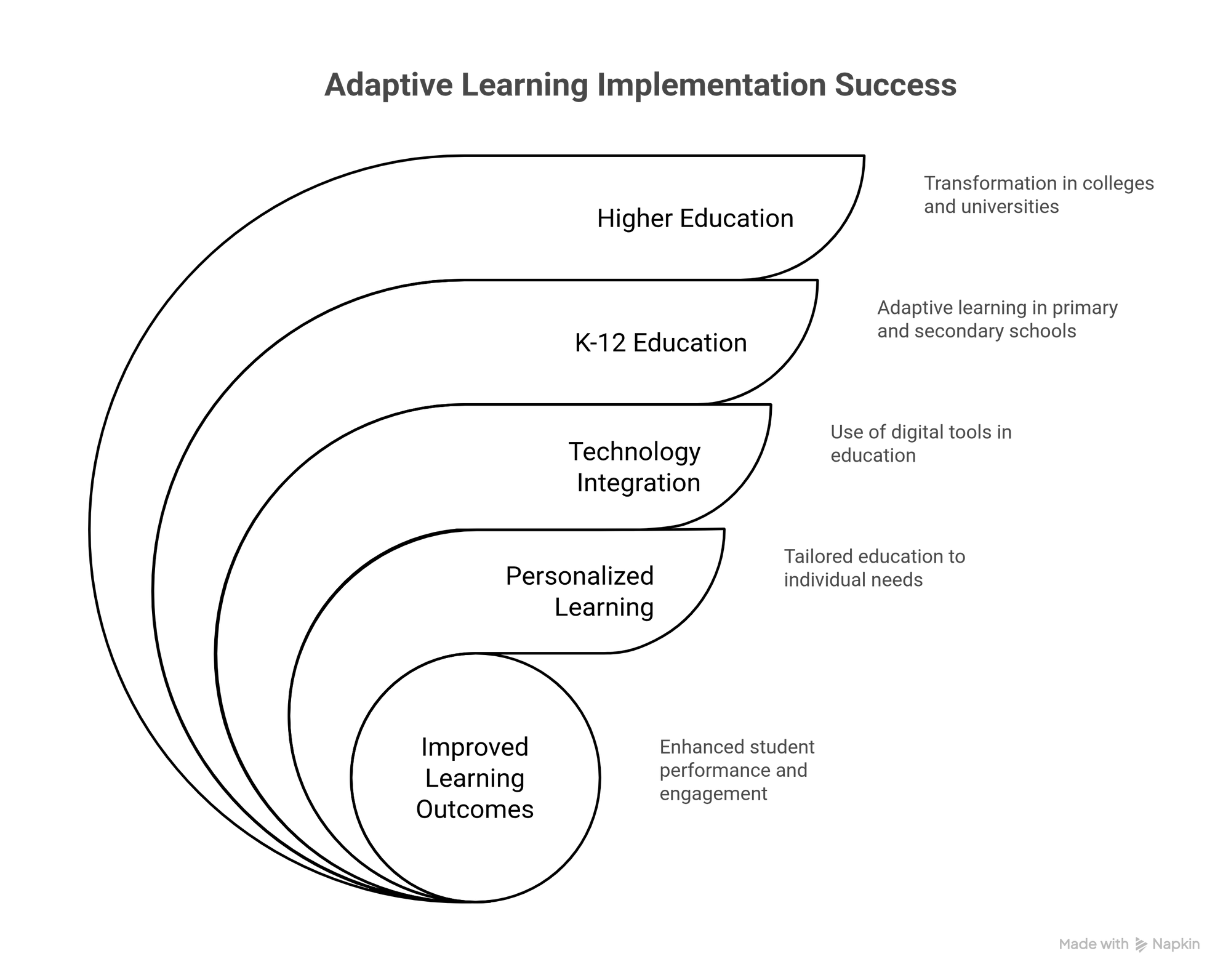
Real-World Implementation Success Stories
K-12 Applications
Learning.com's EasyTech program shows what adaptive learning looks like in K-12 digital literacy education. Students develop keyboarding, online safety, and computational thinking skills through personalized pathways that adjust to individual progress and learning styles. Schools report not just improved technical skills, but increased confidence and engagement with technology across all subjects.
Higher Education Transformations
University of Central Florida transformed foreign language instruction by implementing adaptive learning software alongside open educational resources. Students progressed through language acquisition at individualized paces while maintaining social learning opportunities through collaborative projects and peer interaction.
Community College Success: Multiple community college systems have used adaptive learning to address the challenge of diverse student preparation levels. By providing personalized mathematics instruction that meets students at their current level, these institutions have improved success rates in gateway courses, the single biggest factor in community college completion rates.
Multi-Campus Coordination
Cuyahoga Community College faced the challenge of ensuring consistent quality across multiple campuses with heavy reliance on adjunct faculty. Adaptive learning platforms provided standardized yet personalized learning experiences, allowing eight adjunct faculty teaching the same business course to deliver consistent, high-quality instruction regardless of individual teaching experience.
Adaptive Learning Platforms Comparison
Addressing Implementation Challenges
The adaptive learning market includes many products that promise personalization but deliver little more than digital worksheets. Before committing to a platform, ask these critical questions:
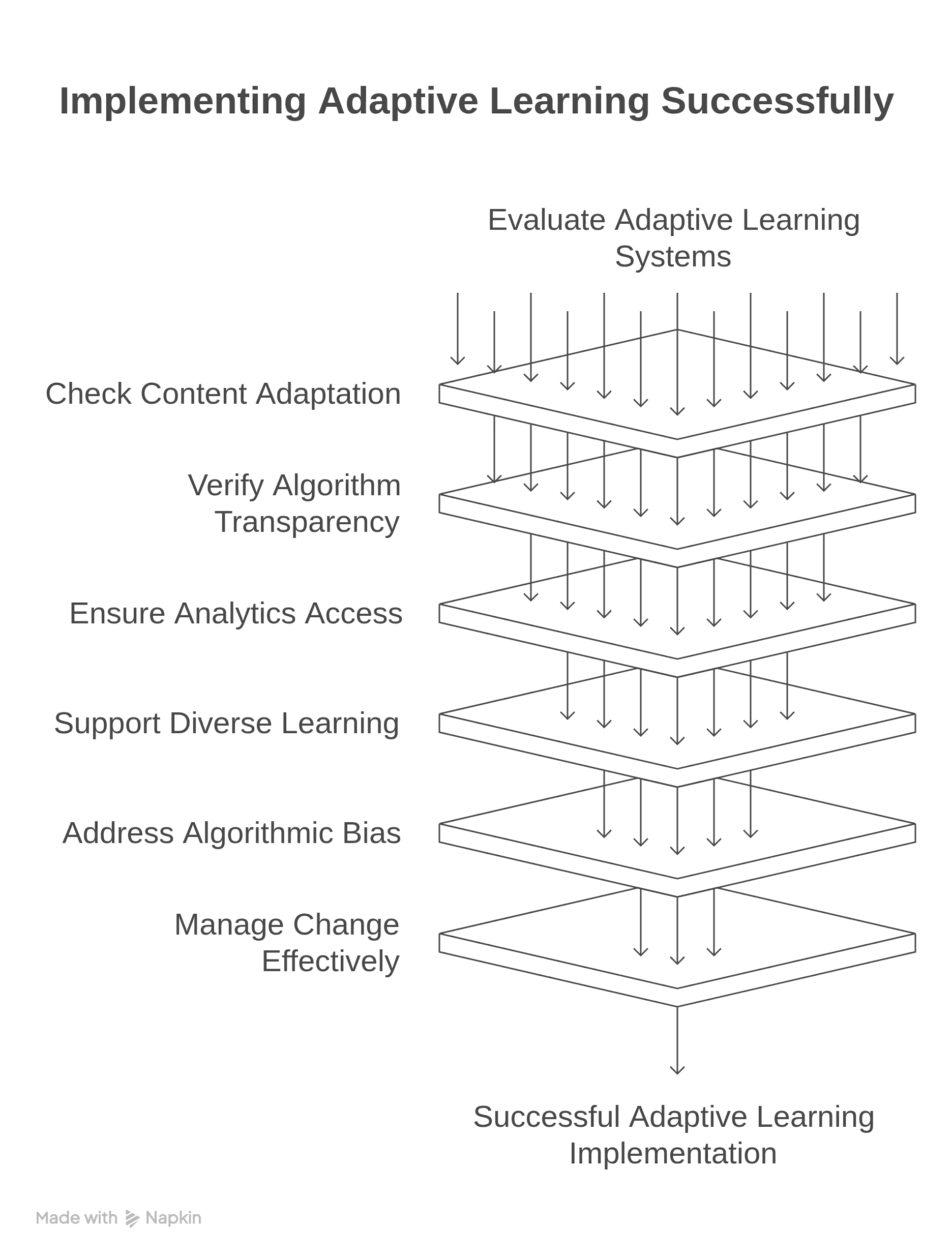
- Does the system genuinely change content and pacing based on individual student performance?
- Are the algorithms transparent and grounded in educational research?
- Can teachers access meaningful analytics that inform instruction, or do they get raw data dumps?
- Does the platform support diverse learning styles and cultural contexts?
True adaptive learning requires sophisticated AI that goes well beyond simple branching scenarios or randomized question banks.
Combating Algorithmic Bias
Avoiding algorithmic bias in education technology requires intentional effort. AI systems learn from historical data, which may reflect past inequities. Educational leaders must ensure that adaptive learning implementations actively promote equity rather than reinforcing existing disparities.
This means selecting platforms that have been tested across diverse student populations, regularly auditing outcomes by demographic group, and maintaining human oversight of algorithmic decisions that affect students.
Change Management and Professional Development
Successful implementation requires more than technical training. Educators need support in:
- Interpreting and acting on learning analytics data.
- Integrating adaptive learning with existing instructional practices.
- Managing classroom dynamics when students work on individualized content.
- Communicating with parents about personalized learning approaches.
Change management should be gradual, allowing teachers to build confidence and competence over time rather than requiring wholesale instructional transformation overnight.
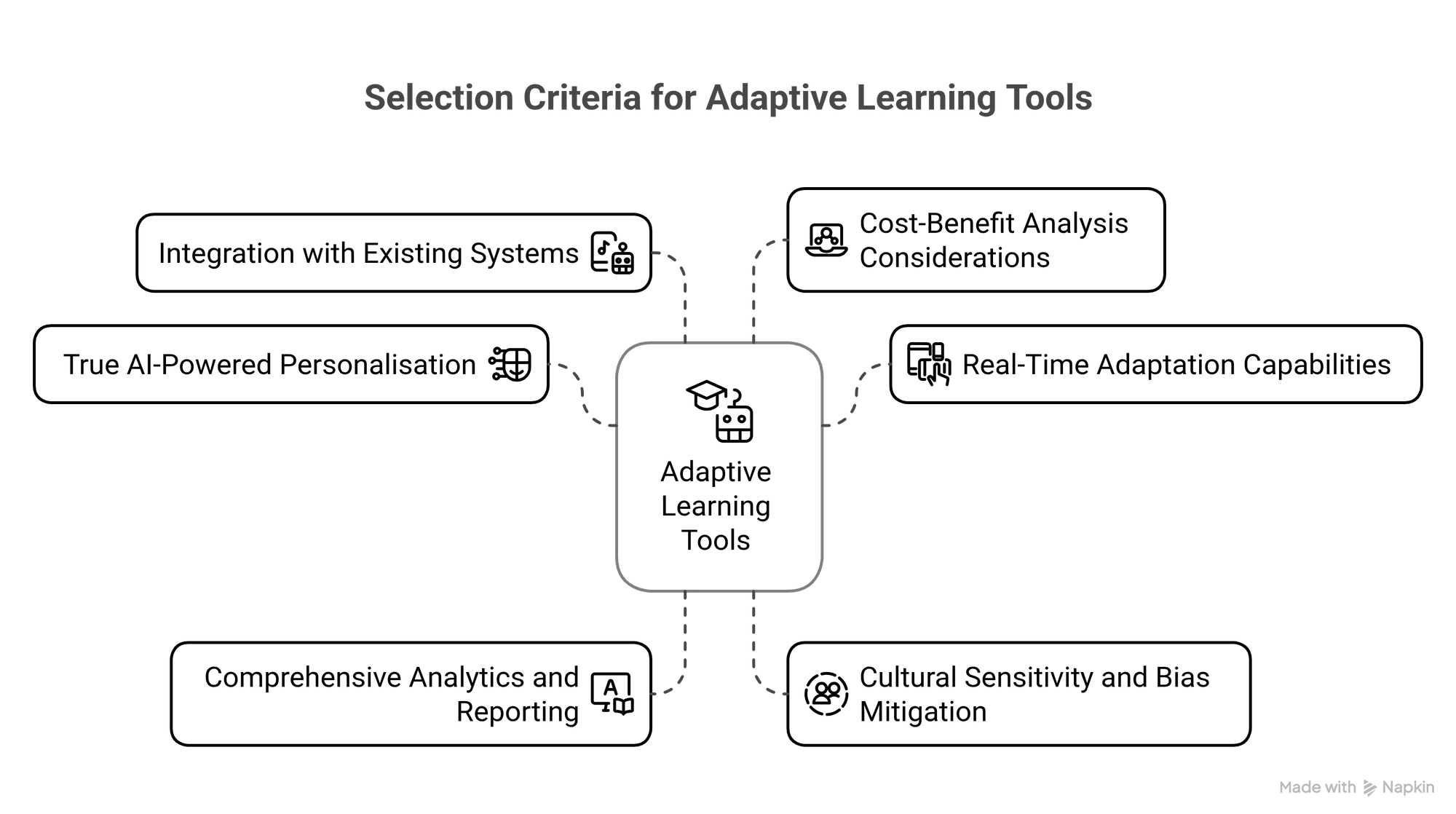
Selection Criteria for Adaptive Learning Tools
- True AI-Powered Personalization: Look for platforms that use machine learning algorithms, not simple rule-based branching. The system should learn from student interactions and improve its recommendations over time.
- Real-Time Adaptation Capabilities: Content and pacing should adjust continuously based on student performance, not just at predetermined checkpoint assessments.
- Actionable Analytics and Reporting: Teachers and administrators need insights that identify priority students and suggest specific interventions, not just raw data. Look for dashboards that surface "who needs help today" rather than requiring manual analysis.
- Cultural Sensitivity and Bias Mitigation: The platform should work effectively across diverse student populations and include features to identify and address potential bias in algorithmic decision-making.
- Integration with Existing Systems: Adaptive learning platforms should connect directly with your existing LMS and student information systems to avoid creating additional administrative burden for already-stretched IT teams.
Cost-Benefit Analysis Considerations
ROI of adaptive learning in schools extends beyond immediate academic improvements. Consider the full picture:
- Reduced need for remedial instruction and supplemental tutoring.
- Improved student retention and graduation rates.
- Stronger teacher effectiveness and job satisfaction.
- Better resource allocation based on data-driven insights.
- Long-term improvements in student preparedness for advanced coursework.
While initial implementation costs may seem significant, the long-term benefits often provide substantial return on investment, especially when measured against the per-student cost of dropout and remediation.
TRT's EdTech team has assessed adaptive learning solutions for schools and universities across the US, UAE, and GCC. We can help you compare vendors, audit technical fit, and build a phased rollout plan. Talk to us →
The Future of AI in Classroom Instruction
The next generation of adaptive learning technology will incorporate more sophisticated AI capabilities. Predictive analytics will identify students at risk of academic difficulty weeks or months before problems surface in test results. Natural language processing will enable precise assessment of student understanding through written responses and verbal interactions.
Virtual and augmented reality integration will create immersive learning experiences that adjust not just content but entire educational environments to match individual learning preferences and needs.
Integration and Blended Learning Models
Blended learning approaches that combine face-to-face instruction with adaptive digital experiences represent the direction education is heading. Students receive personalized practice and content introduction through adaptive platforms while engaging in collaborative problem-solving and discussion in physical classrooms.
This hybrid approach captures the strengths of both human instruction and artificial intelligence, producing learning experiences that are both deeply personal and richly social.
Scalability and System-Wide Implementation
As adaptive learning platforms mature, district-wide and state-wide implementations are becoming more common. This scalability extends access to personalized learning beyond wealthy districts and elite institutions, giving every student, regardless of zip code, access to instruction that adjusts to their needs.
Getting Started: A Practical Implementation Roadmap

Begin by conducting a thorough analysis of current educational challenges and student needs. What are your biggest instructional pain points? Where do students consistently struggle? Which populations are underserved by current approaches?
Use this assessment to identify specific goals for adaptive learning implementation. Are you primarily focused on improving remedial education outcomes? Accelerating gifted learners? Reducing achievement gaps? Clear objectives will guide platform selection and implementation strategy.
Pilot Program Development
Start small with a carefully designed pilot program. Choose a single course or grade level where you can thoroughly test adaptive learning approaches and gather data about effectiveness before scaling.
This pilot should include:
- Baseline data collection on student performance and engagement.
- Careful selection of participating teachers who are open to innovation.
- Regular feedback collection from students, teachers, and parents.
- Systematic documentation of challenges and successes.
Professional Development Strategy
Professional development for adaptive learning should be ongoing and varied. Begin with foundational training on adaptive learning principles and the specific platform being implemented. Follow up with regular coaching sessions where teachers can share experiences, troubleshoot challenges, and learn advanced features.
Create communities of practice where educators can collaborate and learn from each other's experiences with adaptive learning implementation; peer learning consistently outperforms top-down training-only approaches.
Success Metrics and Continuous Improvement
Measuring success in adaptive learning programs requires both quantitative and qualitative indicators:
- Academic performance improvements (test scores, course completion rates).
- Student engagement metrics (time on task, self-reported motivation).
- Teacher satisfaction and confidence with the technology.
- Parent and community feedback.
- Long-term outcomes (college readiness, career preparation).

Data Privacy and Compliance: What to Check Before You Buy
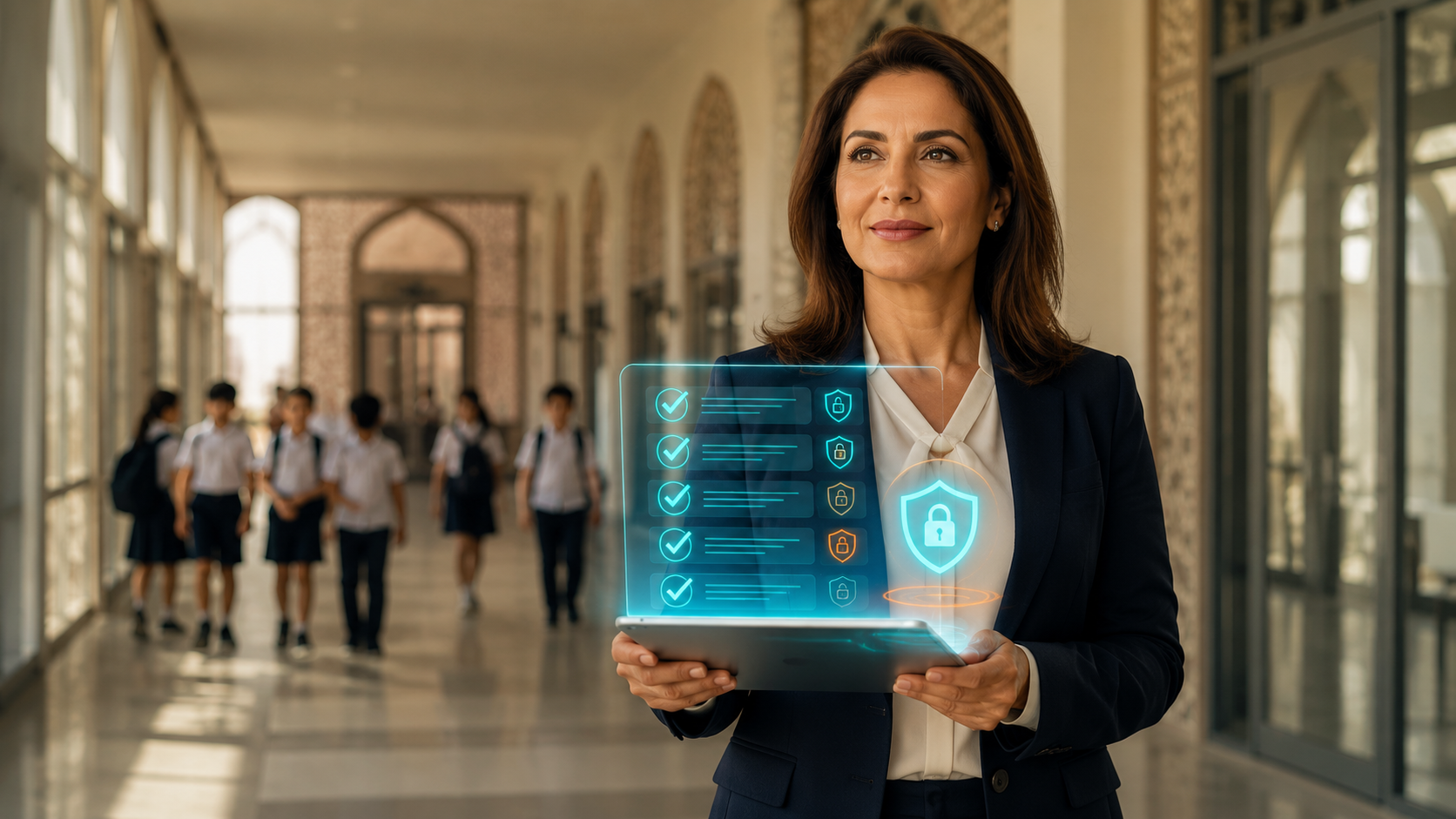
Any adaptive platform collects detailed data on how each student learns, so student-data privacy should be the first question a district or university asks, not the last. In the United States that means confirming how a vendor handles FERPA (the Family Educational Rights and Privacy Act) and, for learners under 13, COPPA (the Children's Online Privacy Protection Act). For institutions serving students in the UK, EU, or GCC, GDPR compliance and alignment with the EU AI Act (2024) must also be confirmed in writing.
Before signing, confirm these essentials with every vendor:
- A signed data-privacy agreement that names the school as the data owner and the vendor as a school official under FERPA.
- Clear limits on how student data is used, shared, and retained, with no use for advertising.
- COPPA-compliant consent handling for any learners under 13.
- Security controls including encryption, access logging, and a documented breach-response process.
A vendor that cannot answer these questions clearly in writing is a risk, regardless of how impressive the algorithm looks in a demo.
Build Your Adaptive Learning Program with Confidence
Adaptive learning technology has crossed from pilot project to core infrastructure in 2026. Districts that ran single-classroom pilots in 2022-2024 are now scaling system-wide, because the evidence justifies the investment. When ASU moved a single gateway course to adaptive courseware, pass rates climbed 22 percentage points. That outcome is repeatable when the technology is chosen carefully and implemented with proper teacher support.
Three factors determine whether an adaptive learning program succeeds or stalls: the quality of the AI (not all platforms adapt equally), the depth of teacher training, and the pace of rollout. Institutions that try to flip entire districts overnight consistently struggle. Those that start with one grade level, measure results for a full semester, and expand from that evidence base see consistent, defensible gains that secure continued budget support.
If you are evaluating adaptive learning platforms for your school, district, or higher education institution, TRT's EdTech team can help you assess technical fit, compare vendor contracts, and build the implementation roadmap that matches your budget and timeline. Schedule your consultation below.
Planning an adaptive learning platform? Third Rock Techkno builds AI-driven learning experience platforms and education software with adaptive engines tailored to your learners and curriculum. Book a free scoping call.