LLM Tutors in Education: Can AI Replace Teachers? (2026 Guide)
What is an LLM tutor? AI-powered tutoring using GPT-4/Claude for personalized learning at scale.


The debate about technology replacing human roles has reached education's doorstep with remarkable intensity. As a technology consultant who has implemented AI solutions across industries for over two decades, I've watched with particular interest as large language models (LLMs) have evolved from experimental curiosities to sophisticated systems capable of explaining complex concepts, providing feedback, and engaging in nuanced educational interactions.
A recent survey by McKinsey found that 61% of educational institutions are already exploring or implementing some form of AI tutoring, with 40% of educators expressing concern about potential job displacement. Meanwhile, EdTech investment in AI tutoring solutions reached $53.02 billion in 2024, signaling significant market confidence in this technology.
But the fundamental question remains: Can these sophisticated AI systems truly replace human teachers? Or are we witnessing the emergence of a powerful new tool that will transform, rather than replace, traditional educational roles?
Quick answer
LLM-based tutors use large language models to give students on-demand, conversational help — explaining concepts, answering questions and adapting to each learner's level. In 2026 they scale one-to-one support affordably, though they need guardrails for accuracy, safety and age-appropriate responses.
TL;DR: Key Takeaways
- Can LLM tutors replace teachers? No — but they're reshaping how education is delivered
- Adoption: 61% of educational institutions are exploring AI tutoring; $53B invested in 2024
- What LLMs do well: 24/7 availability, unlimited scale (Khanmigo serves 15M+ students), personalized pacing, judgment-free environment
- What LLMs can't do: Build genuine relationships, provide emotional support, teach physical skills, guide moral development, facilitate real social learning
- The future: Hybrid models — AI handles content delivery and practice; teachers focus on mentorship, critical thinking, and social-emotional development
- McKinsey finding: 40% of educators are concerned about job displacement, but evidence points to augmentation, not replacement
What is an LLM Tutor?
An LLM tutor (Large Language Model tutor) is an AI-powered educational system that uses transformer-based language models like GPT-4 or Claude to provide personalized tutoring at scale. Unlike traditional intelligent tutoring systems that required explicit programming for each subject, LLM tutors can explain concepts across disciplines, generate custom examples, provide feedback on student work, and adapt explanations based on individual learner needs.
How LLM Tutors Differ from Traditional Tutoring Systems
Examples of LLM Tutors in Use Today
The Evolution of AI in Education: From Basic Programmed Instruction to LLM Tutors
To understand today's capabilities, we must first appreciate how far educational technology has come. In the 1960s, programmed instruction offered basic branching logic — essentially glorified multiple-choice with predetermined paths. By the 1990s, we saw the emergence of more sophisticated intelligent tutoring systems that could adapt to student performance within narrowly defined domains.
Adaptive learning in education has changed modern education by utilizing AI technology to create personalized, flexible learning experiences that cater to individual needs and learning styles.
Today's LLM-based tutors represent a quantum leap forward. Using transformer architecture and trained on vast text corpora, modern systems like GPT-4 and Claude demonstrate capabilities that would have seemed impossible just five years ago:
- Explaining complex concepts across disciplines
- Generating examples tailored to student interests
- Providing detailed feedback on written work
- Answering follow-up questions to clarify understanding
- Adapting explanations based on student responses
These systems differ fundamentally from their predecessors in their flexibility. While earlier tutoring systems required explicit programming for each learning domain, modern LLMs demonstrate remarkable "zero-shot" capabilities — responding effectively to educational queries without specific training for that exact task.
How Modern LLMs Work in Educational Contexts
Before evaluating their potential as teacher replacements, it's important to understand how LLMs actually function in educational settings.
At their core, these models predict the most likely text continuation based on training data and the provided prompt. When used for tutoring, this means generating explanations, examples, and feedback that statistically resemble high-quality educational interactions from their training data.
The most effective AI tools for education typically incorporate four key components:
- Fine-tuning on educational content — Many systems receive additional training on textbooks, lesson plans, and educational interactions to improve domain knowledge.
- Prompt engineering — Carefully designed instructions help guide the model toward effective tutoring behaviors.
- Memory mechanisms — Systems maintain conversation history to provide coherent, progressive assistance across a learning session.
- Multimodal capabilities — Advanced systems can process and generate diagrams, equations, and other non-text content essential for many subjects.
When implemented effectively, these systems create an interactive experience that approximates some aspects of human tutoring. Students can ask questions, receive explanations, work through problems, and get feedback in a conversational format.
Use Cases for LLMs in Education
LLMs are being applied across educational contexts in several key ways:
1. Personalized Tutoring
LLMs provide one-on-one tutoring at scale, adapting explanations to individual learning styles, answering follow-up questions, and adjusting difficulty based on student responses.
2. Automated Assessment and Feedback
LLMs can evaluate student writing, provide rubric-aligned feedback, identify common misconceptions, and offer suggestions for improvement — freeing teachers from hours of grading.
3. Content Generation
Educators use LLMs to create lesson plans, generate practice problems, develop differentiated materials for diverse learners, and produce study guides tailored to specific curricula.
4. Language Learning
LLMs enable conversational practice in foreign languages, pronunciation feedback, and contextual vocabulary learning without requiring a human conversation partner.
5. Accessibility Support
LLMs can simplify complex texts for struggling readers, provide real-time explanations for students with learning differences, and generate alternative formats for diverse needs.
6. Administrative Efficiency
Beyond instruction, LLMs help with parent communication, IEP documentation, progress reports, and other administrative tasks that consume teacher time.
7. Research and Study Assistance
Students use LLMs to understand complex papers, generate study questions, explain difficult concepts, and receive guidance on research methodology.
Our team at Third Rock Techkno has delivered AI and EdTech solutions for 50+ clients. Talk to us →
The Strengths of LLM-Based Tutoring
Having implemented AI solutions across industries, I've seen firsthand how these systems can deliver significant value. In educational contexts, LLM tutors offer several compelling advantages.
Unprecedented Accessibility and Scale
Perhaps the most transformative aspect of LLM tutors is their accessibility. Traditional tutoring faces fundamental scaling challenges — there simply aren't enough qualified human tutors to provide one-on-one support for every student who could benefit.
AI models can deliver personalized support at virtually unlimited scale. Research from Khan Academy's implementation of Khanmigo showed they could provide one-on-one support to over 15 million students — something that would require recruiting every college graduate in America as a tutor if attempted with humans alone.
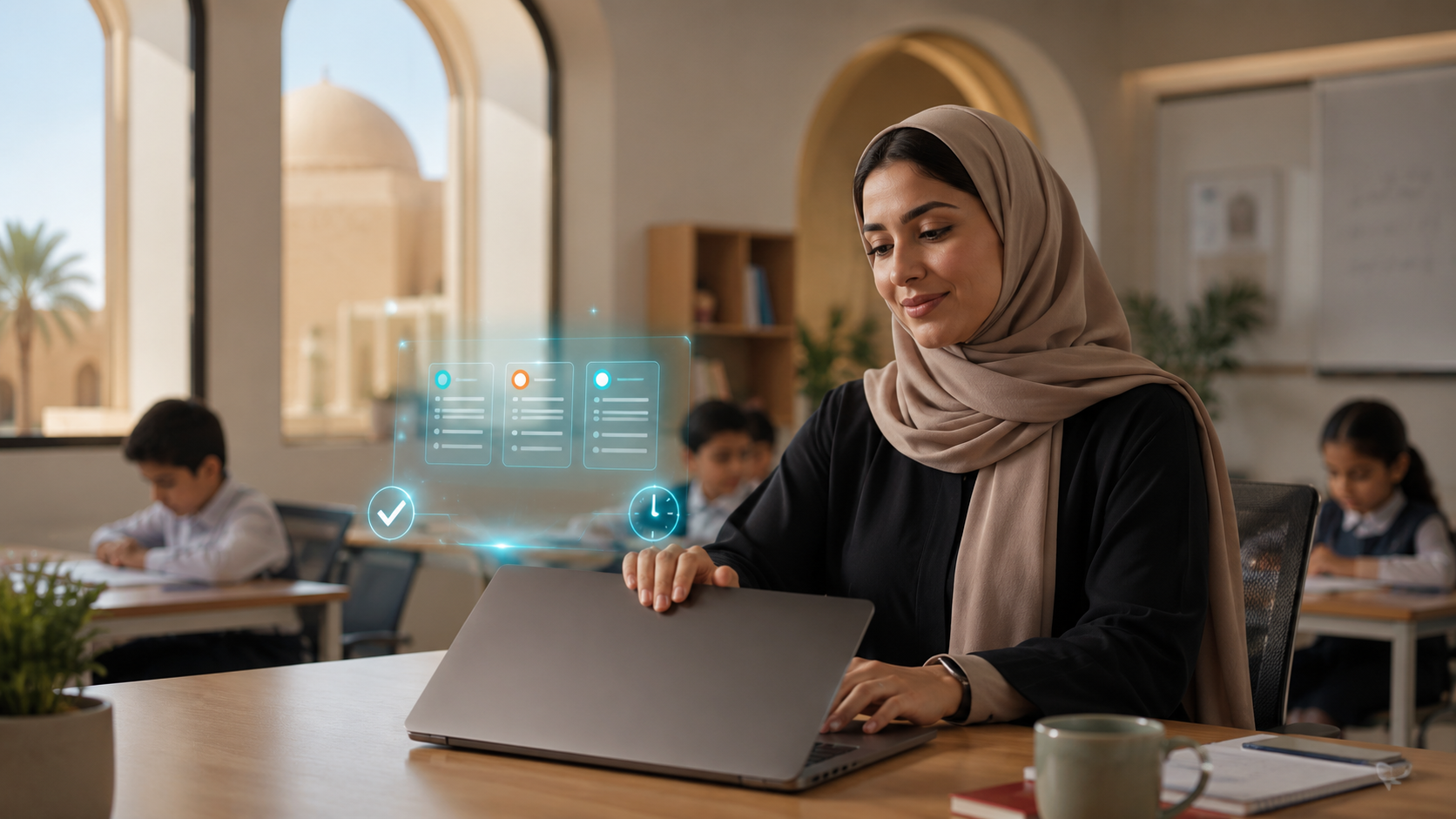
This accessibility extends beyond numbers to availability. LLM tutors don't sleep, don't get tired, and don't have scheduling constraints. A student struggling with algebra at 11 PM can receive immediate assistance rather than waiting for office hours or scheduled tutoring sessions.
Top LLM Tutoring Platforms (2026)
Personalized Learning at Unprecedented Depth
Modern adaptive learning systems can tailor educational experiences to individual students in ways that are challenging in traditional classrooms:
- Pace adjustment — Students can progress at their optimal speed, neither bored by slow progression nor lost by moving too quickly. LLMs enable personalized learning paths that adapt to individual student needs.
- Approach customization — When a learner doesn't understand a concept, the system can present alternative explanations using different approaches, examples, or analogies.
- Interest incorporation — LLMs can customize examples to align with student interests, making abstract concepts more relevant and engaging.
- Knowledge gap identification — These systems can identify and address foundational knowledge gaps that might be hindering progress on current topics.
Psychological Safety and Reduced Anxiety
One often-overlooked advantage is the psychological safety that AI tutors provide. Many students hesitate to ask "basic" questions in class due to fear of judgment from teachers or peers. AI tutors create judgment-free zones where students can:
- Ask the same question multiple times without frustrating the "tutor"
- Admit confusion without embarrassment
- Make mistakes without feeling evaluated
- Learn at their own pace without social comparison
Our team at Third Rock Techkno has delivered AI-powered EdTech solutions for institutions across GCC and beyond. Talk to us →
The Fundamental Limitations of LLM Tutors
Despite their impressive capabilities, understanding limitations is as important as recognizing potential — especially when considering replacing human teachers.
The "Black Box" of Understanding
Perhaps the most fundamental limitation is that LLMs don't truly "understand" concepts the way humans do. They recognize statistical patterns in text but lack grounded conceptual understanding, conscious reflection, or the ability to reason from first principles. This creates several critical educational limitations:
- Hallucination risk — LLMs can confidently present incorrect information, creating a particularly dangerous situation in educational contexts where students lack the knowledge to identify errors.
- Inability to recognize genuine understanding — While LLMs can assess whether answers match expected patterns, they cannot truly determine if a student has developed conceptual understanding versus superficial pattern matching.
- Limited creativity in problem-solving — LLMs excel at applying known approaches but struggle with truly novel problem-solving requiring innovative thinking.
The Social and Emotional Dimensions of Education
Education extends far beyond knowledge transfer to include social-emotional development, motivation, character building, and cultural transmission. These dimensions happen through human connection and modeling that LLMs fundamentally cannot provide:
- Motivational limitations — While LLMs can offer programmed encouragement, they lack the authentic relationship that drives many students to perform for teachers they respect.
- Absence of role modeling — Human teachers model intellectual curiosity, ethical thinking, and emotional regulation. LLMs can describe these qualities but cannot authentically embody them.
- Missing social dynamics — Learning often occurs through social interaction, with teachers facilitating peer collaboration and discussion essential in all professional contexts.
Domain-Specific Limitations
While LLMs demonstrate impressive breadth, they face significant limitations in specific educational domains:
- Physical skills — Subjects requiring physical demonstration and feedback (sports, laboratory sciences, arts) remain largely beyond LLM capabilities.
- Mathematical reasoning — Despite improvements, LLMs still struggle with complex mathematical problem-solving and proof development.
- Original research guidance — LLMs can summarize existing knowledge but cannot guide students in generating genuinely new knowledge.
- Ethical development — LLMs lack the moral agency necessary to authentically guide moral and ethical development.
The Hybrid Future: Augmentation Rather Than Replacement
After analyzing both the capabilities and limitations of large language models in education, the evidence points clearly toward augmentation rather than replacement — a pattern observed repeatedly across industries where AI implementation initially triggered replacement fears.
The most promising implementations combine the scalability and personalization of adaptive learning with the irreplaceable human elements teachers provide.
Teacher as Curator and Guide
Rather than delivering content and basic instruction (where LLMs excel), teachers increasingly serve as expert curators and learning guides, focusing on:
- Content curation — Selecting high-quality resources and learning pathways from an overwhelming array of options. See our guide to AI tools for teachers for practical recommendations.
- Validity assurance — Verifying the accuracy of AI-generated content and addressing misinformation.
- Learning strategy development — Helping students develop metacognitive skills and effective learning approaches.
- Critical thinking facilitation — Guiding students in evaluating information and developing reasoned judgments.
Complementary Strengths Model
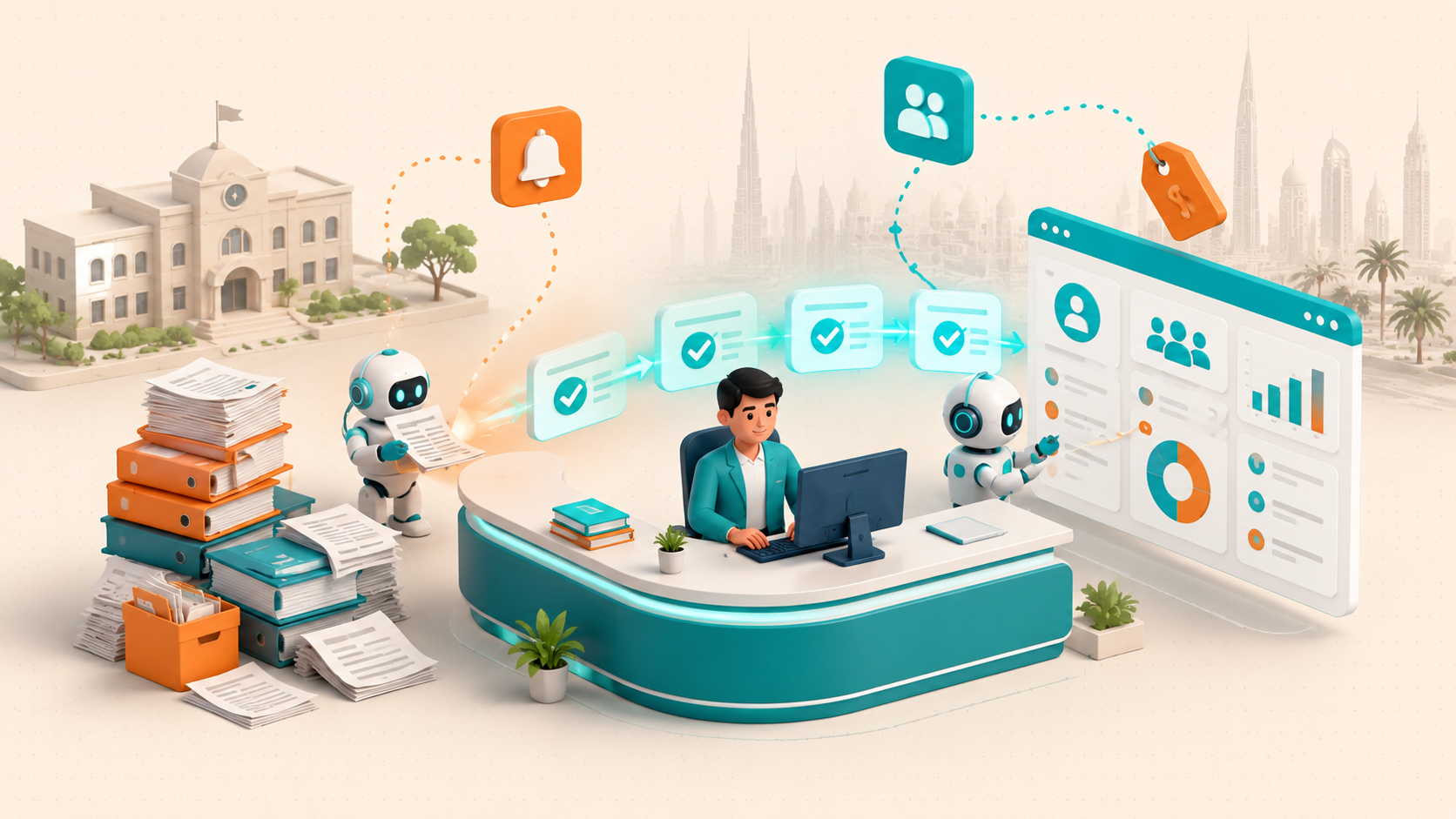
The most successful implementations leverage the complementary strengths of human teachers and AI systems. AI handles presenting initial explanations, providing practice opportunities, offering immediate feedback on routine work, and delivering personalized review materials. Teachers focus on building relationships, facilitating discussions, developing higher-order thinking, providing nuanced feedback on complex work, and supporting social-emotional development.
This division allows teachers to focus their limited time on high-impact activities where human judgment and connection remain irreplaceable. The next evolution, AI agents in education, takes this further with autonomous systems that can monitor, predict, and intervene.
The Expanded Educational Ecosystem
Rather than a simple replacement narrative, we're seeing the emergence of an expanded educational ecosystem that includes:
- Core classroom instruction — Human teachers working with student cohorts.
- AI tutoring supplements — Providing additional practice, explanation, and personalized support.
- Human tutoring for specific needs — Targeted intervention where human connection is most needed.
- Peer learning communities — Facilitated by teachers but enhanced with AI tools.
Implementation Challenges and Ethical Considerations
Equity and Access Concerns
Distributed learning remains a significant barrier, with the Pew Research Center reporting that 15% of U.S. students still lack reliable home internet access — rising to nearly 30% in low-income communities. Effective implementation requires ensuring technology access across socioeconomic boundaries and preventing a two-tier system where some students receive high-touch human education while others primarily interact with AI.
Privacy and Data Security
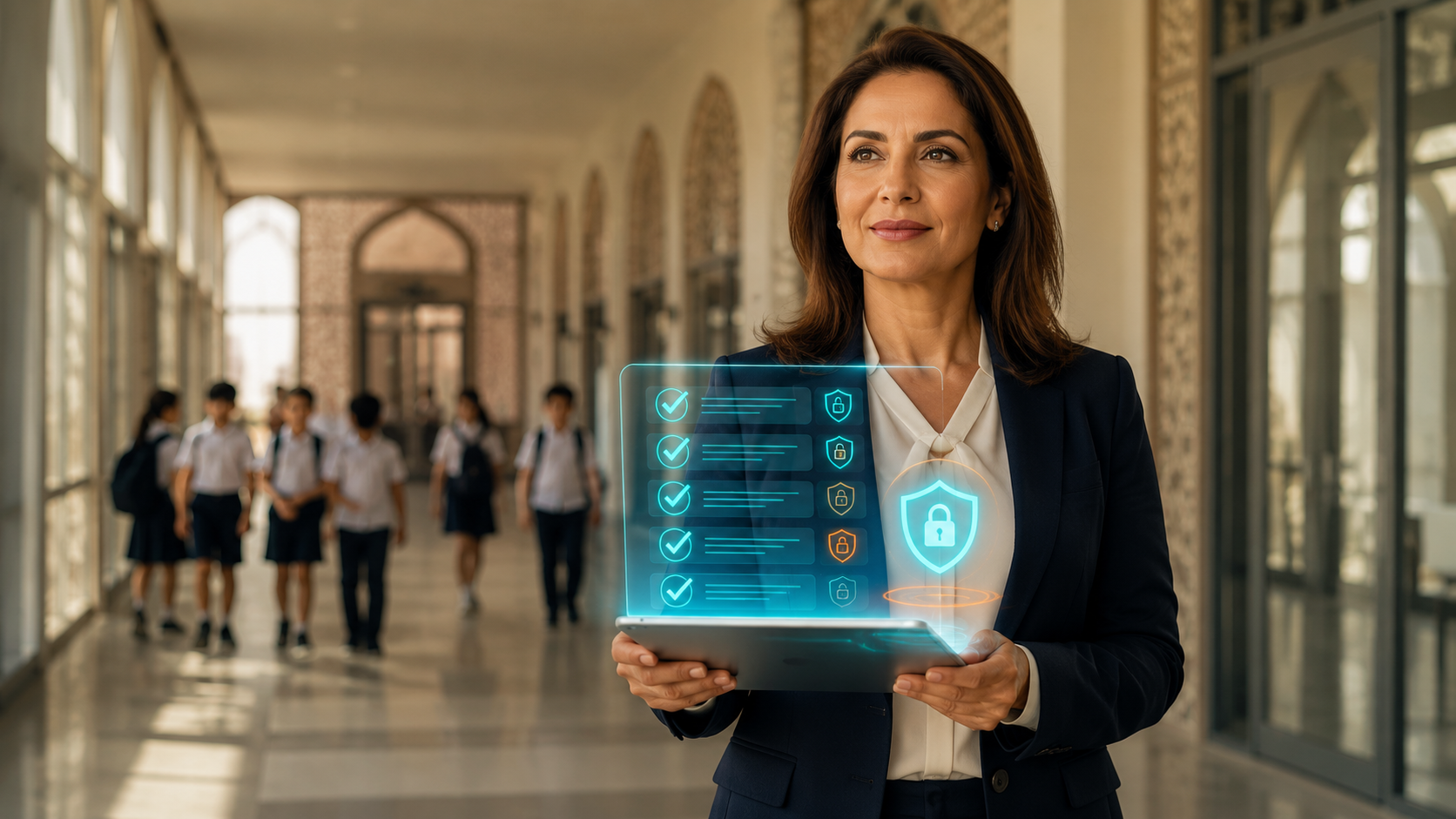
LLMs in educational applications generate sensitive data about students' learning patterns, strengths, weaknesses, and behaviors. Protecting this information requires clear data governance policies, strong security measures, transparency with students and parents, and compliance with educational privacy regulations like FERPA.
Teacher Training and Professional Development
Without adequate support, even the most sophisticated technology will fail to deliver its potential benefits. Key requirements include technical training on system capabilities and limitations, pedagogical guidance on restructuring teaching approaches, and communities of practice to share effective strategies.
The Path Forward: Recommendations for Stakeholders
For Educational Leaders and Administrators
Implement AI tutors to address specific educational needs rather than because the technology is available. Allocate significant resources to helping teachers adapt their practice. Look beyond test scores to measure impacts on engagement, higher-order thinking, and social-emotional development. Begin with pilot programs, gather feedback, and scale thoughtfully.
For Teachers
Emphasize the aspects of education that require human connection and judgment. Develop sufficient understanding of AI capabilities to effectively integrate these tools. Try different approaches to find effective hybrid models for your specific context and actively participate in the development and refinement of AI tutoring systems.
For Technology Developers
Create systems that enhance rather than attempt to replace teacher capabilities. Make limitations clear and provide tools to identify potential inaccuracies. Ensure teacher input throughout the design process and participate in rigorous, independent evaluation of educational outcomes.
Conclusion
The answer to whether LLM tutors can replace human teachers is emerging clearly — no, but they're reshaping what teaching looks like. Hybrid models that combine AI's scalability and personalization capabilities with the human connection, judgment, and wisdom that effective education requires represent the most promising path forward.
These models don't eliminate teachers but elevate their role from basic content delivery to higher-value activities that truly require human capabilities. Is your educational institution exploring how to effectively integrate AI tutoring into its education industry solutions?

Bringing AI into your school or EdTech product? Third Rock Techkno offers AI in education consulting and builds custom education software and learning platforms — from strategy through deployment. Book a free consultation.